
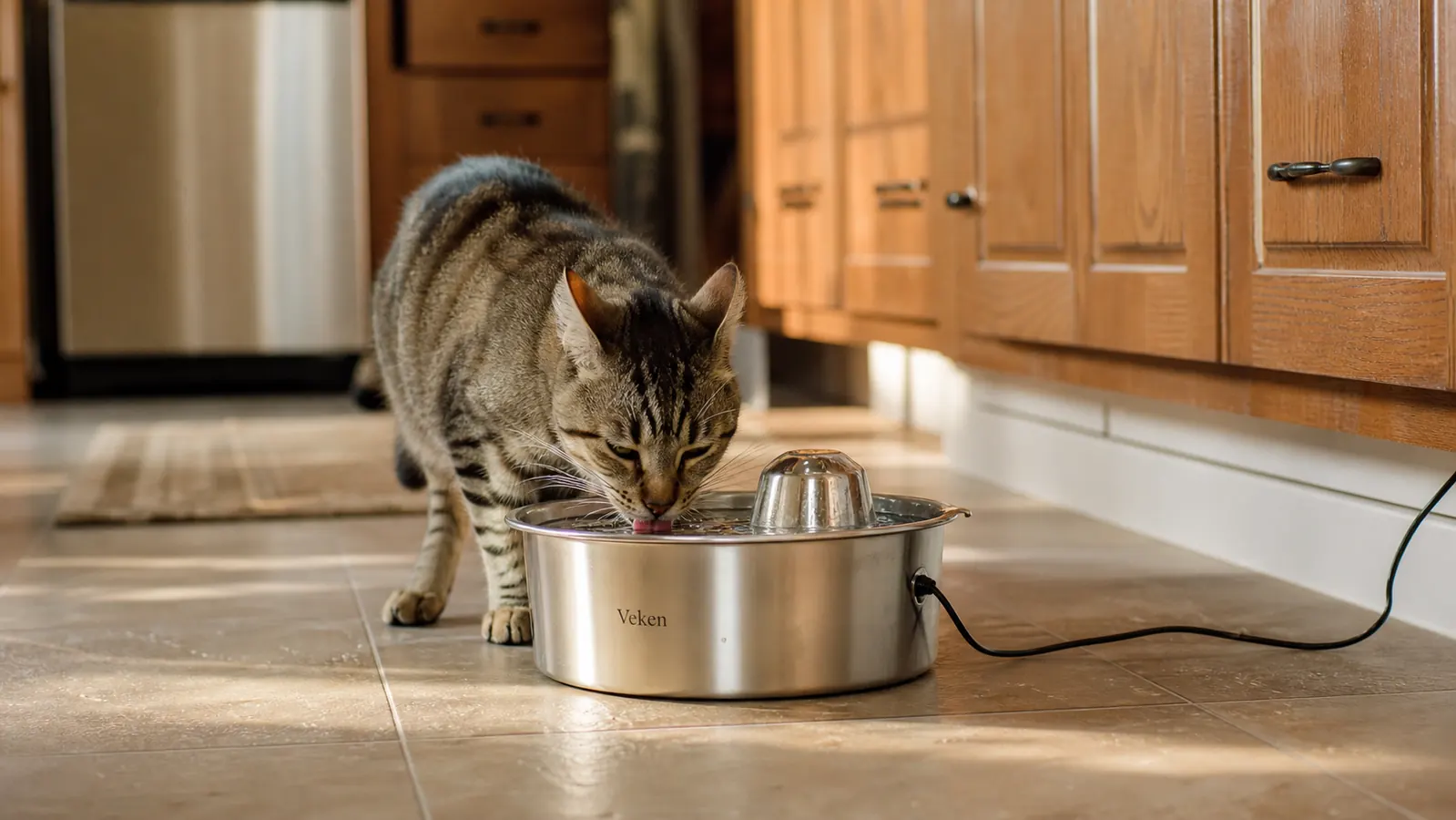
My cat Miso spent the first four years of her life treating her water bowl like it was invisible. She would walk right past it, sometimes giving it a single suspicious sniff, then carry on with her day. Meanwhile I was topping it off constantly, wondering if she was drinking at all. My vet flagged her bloodwork at her annual checkup, not crisis-level, but her kidney values were creeping in a direction nobody wants to see. "She needs more water," my vet said. That sounds simple until you realize that getting a finicky cat to drink is one of the most maddeningly stubborn problems in pet care. What finally turned things around was a pet water fountain, specifically the Veken fountain I will walk you through below.
Cats are not just small dogs. They evolved from desert-dwelling ancestors who got most of their hydration from prey, not from standing puddles. A cat's thirst drive is genuinely weaker than ours, and their kidneys evolved to concentrate urine efficiently, which is great for surviving dry climates, but terrible when they live on dry kibble and ignore their water bowl in a climate-controlled apartment. Chronic low-grade dehydration is one of the leading contributors to urinary tract disease and kidney problems in domestic cats. The good news: there are concrete, practical steps that actually move the needle. Here is what worked for Miso, and what the research and my vet both back up.
If your cat ignores still water, a running fountain is the fastest fix, here's the one I use daily.
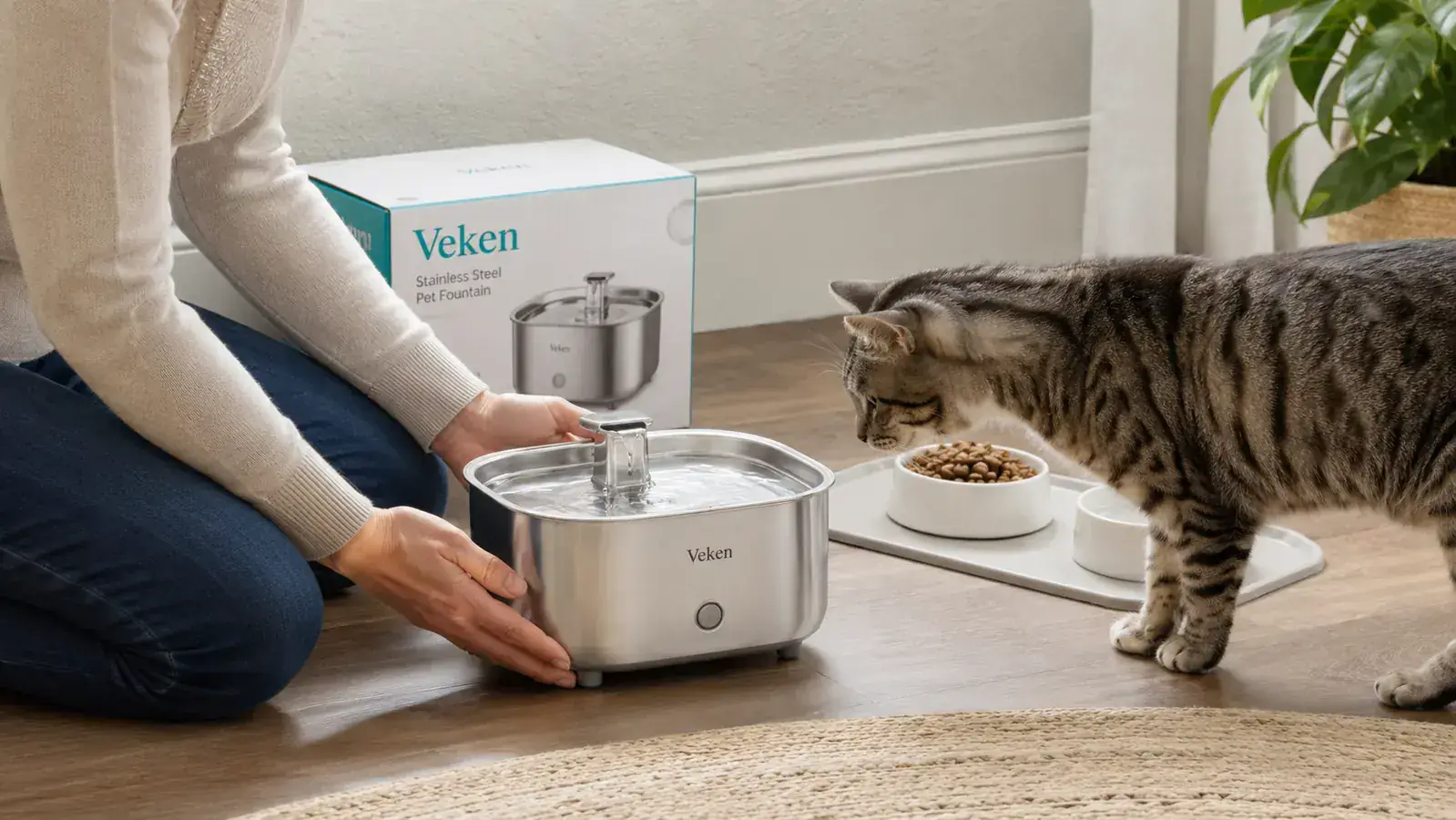
The Veken Stainless Steel Pet Fountain (108 oz, with triple filtration) is the single biggest change I made for Miso. Running water triggers a cat's natural drinking instinct in a way that a static bowl never will. It holds enough for multiple pets and runs quietly enough that it doesn't spook skittish cats.
Amazon Check Today's Price on Amazon →Step 1: Switch from a Still Bowl to a Running Water Fountain
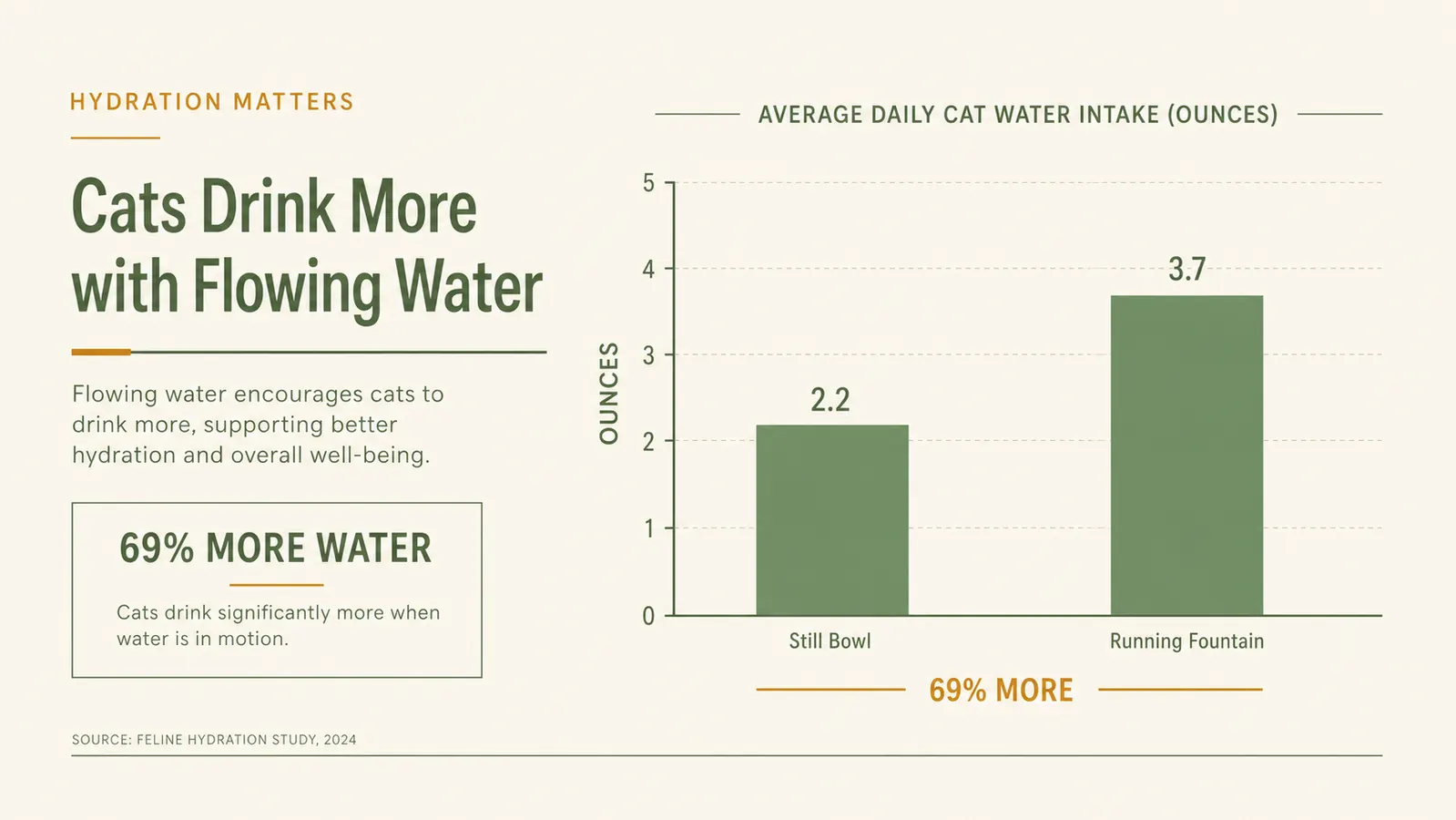
This is the single change that made the biggest difference for Miso, and it is the one I recommend first to anyone who asks. In the wild, cats instinctively associate still water with stagnation and potential contamination. Running water signals freshness. A pet fountain mimics that cue in a way that a ceramic bowl sitting on the kitchen floor simply cannot. Within three days of setting up the Veken Stainless Steel Pet Fountain, Miso was drinking noticeably more. I could hear it. I started seeing her visit the fountain five or six times a day instead of the once-a-day reluctant sips she was giving the bowl.
The Veken holds 108 ounces, which is plenty for two cats or a cat and a small dog, and you are not filling it every other day. The stainless steel matters more than I expected. Plastic fountains can harbor biofilm in tiny surface scratches, which can irritate some cats' chins and also gives the water an off taste over time. Stainless cleans up cleanly and does not degrade. The triple filtration system (foam pre-filter, activated carbon filter, ion exchange resin) keeps the water tasting neutral, which finicky cats notice. If your cat is suspicious of new things, place the fountain near where the old bowl was, run it on the lower flow setting at first, and give it a week before deciding it is not working. Most cats come around within a few days.
One trade-off I want to be upfront about: fountains require maintenance. You need to rinse the bowl and refill it every two to three days, and you need to swap the carbon filter roughly every four weeks (the Veken comes with extra filters in the box). If you are someone who will forget about it for two weeks, the water quality will drop and your cat will probably stop using it. Build the rinse into your routine and it becomes no bigger a deal than washing their food dish.
Step 2: Move the Water Source Away from the Food Dish
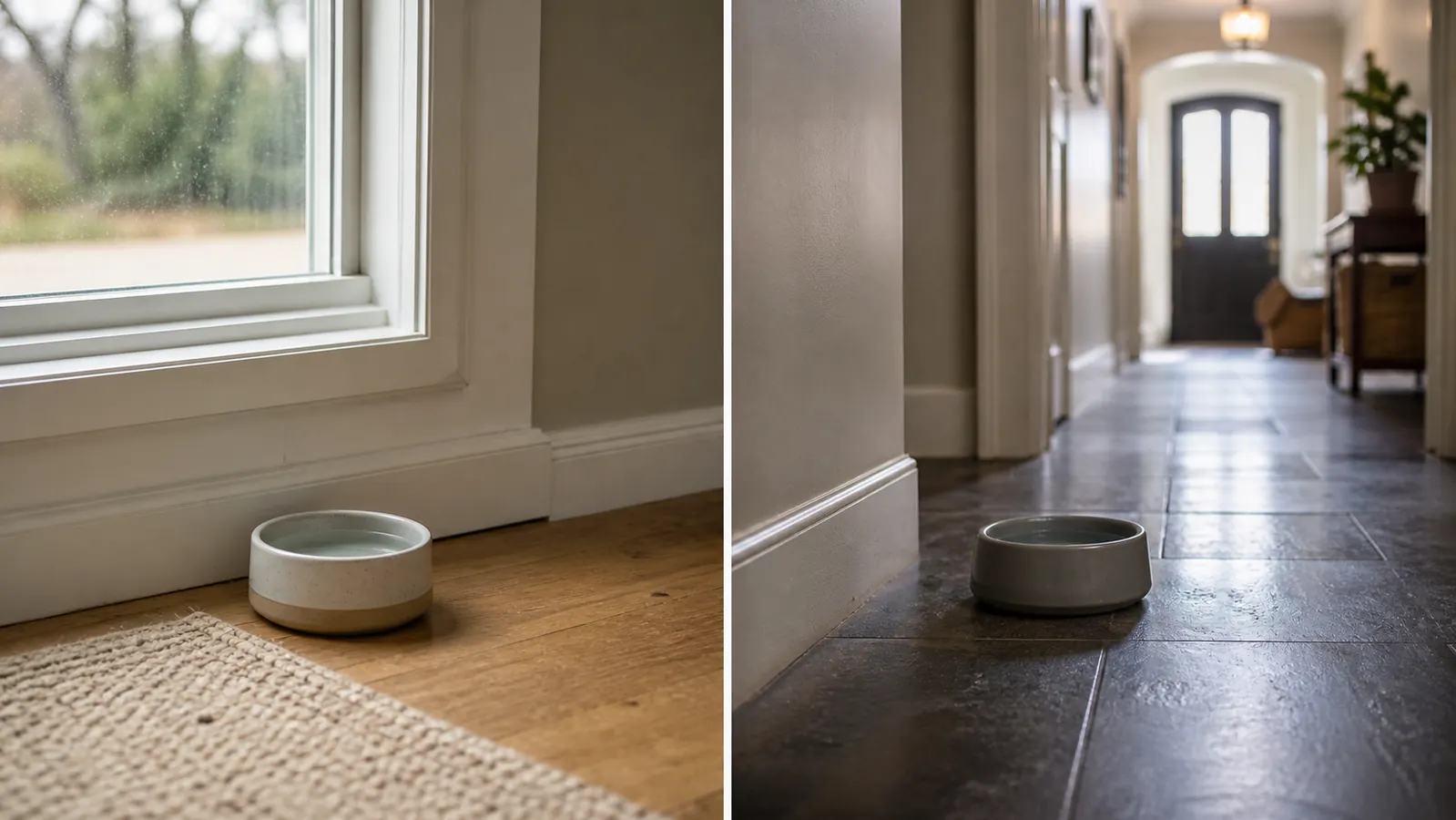
This one surprises a lot of people. Conventional pet-owner logic says keep food and water in the same spot for convenience. But cats are wired differently. In the wild, a food source (a carcass) is also a contamination source. Cats instinctively prefer to drink away from where they eat. If your cat's water bowl is sitting six inches from her food dish, she may be avoiding it for exactly this reason. Try placing the water source in a completely different room, or at least across the kitchen. I moved Miso's fountain to the corner of the living room, about fifteen feet from her feeding station, and her water visits increased again.
If you have a multi-level home, put one water source on each floor. Cats are territorial about space and some cats will not walk past a perceived boundary to get a drink. More locations means more opportunities to drink opportunistically. This is especially relevant for multi-cat households where one cat may be subtly guarding resources.
Step 3: Add Water to Wet Food (or Switch Partially to Wet)
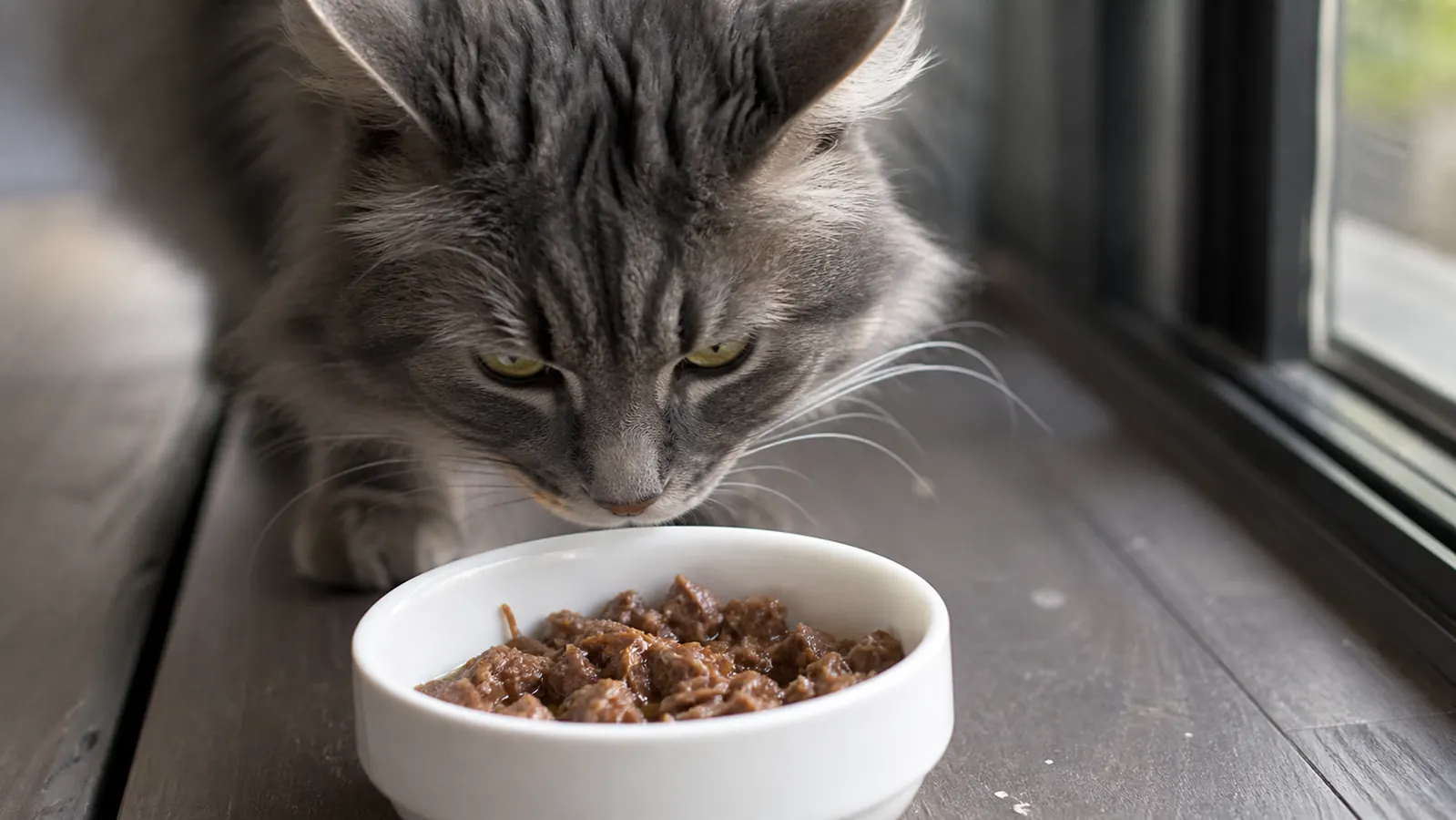
Wet food is roughly 70 to 80 percent water. Dry kibble is closer to 10 percent. If your cat is eating exclusively dry food, they are starting from a significant hydration deficit before they even consider the water bowl. Adding a wet food meal once a day, or even mixing a small amount of wet food or a tablespoon of low-sodium broth into their kibble, delivers hydration in a form cats naturally accept because it mimics the moisture content of prey.
If full wet food is not in your budget or your cat has been on dry food for years and refuses to switch, try adding water directly to their dry kibble. Start with just a small splash and increase it over a week. Some cats take to it immediately. Others need time. A few will refuse it entirely, and for those cats, the fountain approach in Step 1 is going to be your primary tool. Do not add broth that contains onion or garlic, which are toxic to cats. Plain, unsalted chicken broth or bone broth specifically marketed as pet-safe is fine.
A cat eating only dry kibble is starting every day at a hydration deficit. Wet food is not a luxury, for a cat who won't drink, it might be the most practical health intervention you can make.
Step 4: Try Different Bowl Materials and Depths
Cats are particular about their whiskers. This sounds like a joke, but whisker fatigue is a real thing. When a bowl is too deep or too narrow, a cat's whiskers press against the sides every time she leans in to drink, and that repeated sensory stimulation can be uncomfortable enough that some cats will walk away and go thirsty rather than deal with it. Wide, shallow bowls reduce this friction. Ceramic and stainless steel are both good choices. Plastic, as noted above, develops a biofilm over time and can subtly off-put cats with sensitive noses.
If you want to experiment before committing to a fountain, try a wide, flat ceramic dish, the kind sometimes marketed as a dog bowl or even a small baking dish. Fill it close to the brim so your cat does not have to reach far into it. Notice whether she seems more willing to drink. If she does, that confirms whisker sensitivity is part of the problem, and a fountain with a wide open basin (like the Veken) will work even better because she can drink from the flowing top without submerging her whiskers at all.
Step 5: Keep the Water Fresh and the Bowl Visibly Clean
Cats have a more sensitive nose than dogs, and they can smell bacterial buildup in a bowl that looks clean to us. If you are refilling the same bowl without washing it daily, there is a good chance your cat is smelling something that is putting her off. Wash the water bowl with hot soapy water every single day, the same way you would wash her food dish. Rinse it thoroughly, soap residue can also deter cats. Refill with fresh, cool water.
Some cats prefer cold water, particularly in warm weather. If you are not sure whether your cat has a temperature preference, try dropping a few small ice cubes in the bowl on a warm day and watch whether she gravitates to it. A small subset of cats become genuinely enthusiastic drinkers when the water is cooler. It costs nothing to test. The fountain helps here too because the circulating water stays slightly cooler than a static bowl left sitting in a warm kitchen.
Step 6: Add Multiple Water Stations Around the Home
The single-bowl setup works fine for some cats. For cats who are poor drinkers, more stations means more chances for a casual, low-effort drink throughout the day. Think about where your cat already spends most of her time. She probably has a few favorite resting spots. Put a small bowl or a second fountain within easy reach of those spots. A cat who is half-asleep in a sunbeam is much more likely to roll over and take a few sips if water is three feet away than if she has to walk to the kitchen.
For our two-cat household, I run the Veken fountain in the living room and keep a wide ceramic dish in the bedroom hallway. Total water intake went up noticeably after I added the second station. My vet was pleased with the improvement in Miso's numbers at her follow-up appointment six months later. Kidney values had stabilized and were trending in a healthier direction.
Step 7: Rule Out Medical Causes if Nothing Else Works
If you have tried all of the above, fountain, multiple stations, wet food, fresh water daily, wide bowls, different locations, and your cat is still drinking very little or showing signs like lethargy, weight loss, or changes in urination, it is time for a vet visit. Chronic dehydration can be a symptom of underlying conditions including kidney disease, hyperthyroidism, or diabetes, all of which need medical management. Do not assume a cat who is not drinking is just being stubborn. Sometimes they are telling you something.
A simple blood panel and urinalysis give your vet the information to either rule out a medical cause or catch something early when it is most treatable. Early-stage kidney disease in cats is very manageable with the right diet and hydration support, but it requires a diagnosis to address properly. Think of the steps in this guide as the first line of intervention, genuinely useful for healthy cats with normal stubbornness. But if the stubbornness is unusually severe or paired with other symptoms, let your vet weigh in.
What Else Helps
Beyond the seven steps, there are a few smaller adjustments worth mentioning. Flavoring water with a tiny amount of tuna juice from a can (packed in water, not oil) can coax reluctant cats to investigate the bowl. It is not a long-term solution, but it can bridge the gap while a cat is getting used to a new fountain or a new location. Some cats also respond well to water placed near a window with an outdoor view, the environmental enrichment keeps them engaged and alert, and they seem to drink more when they are in an exploratory, curious state.
For cats with known urinary tract sensitivity, your vet may also recommend a urinary health wet food formulation, which has a higher moisture content and is specifically formulated to support kidney and bladder function. These are sold at most pet stores and on Amazon, and they pair well with the fountain approach, the food handles the bulk of hydration, the fountain provides the supplemental top-up throughout the day.
The bottom line is that most cats can be nudged toward better hydration habits with patience and a few environmental changes. The fountain is the highest-leverage single change you can make. Everything else builds on top of it. If you want to dig deeper into why running water works so well and what the data shows on cat hydration and kidney health, I have more detail in my full Veken fountain review and in my breakdown of why cats need a pet water fountain at all, both worth reading if you are at the beginning of this journey.
Ready to give your cat the running water they're actually wired to drink from?
The Veken Stainless Steel Pet Fountain is where I would start. It is quiet, easy to clean, holds enough water for multiple pets, and has made a measurable difference for both of my cats. Over 17,000 Amazon reviewers agree it is worth it, and at the current price, it pays for itself if it spares you even one extra vet visit.
Amazon Check Today's Price on Amazon →