
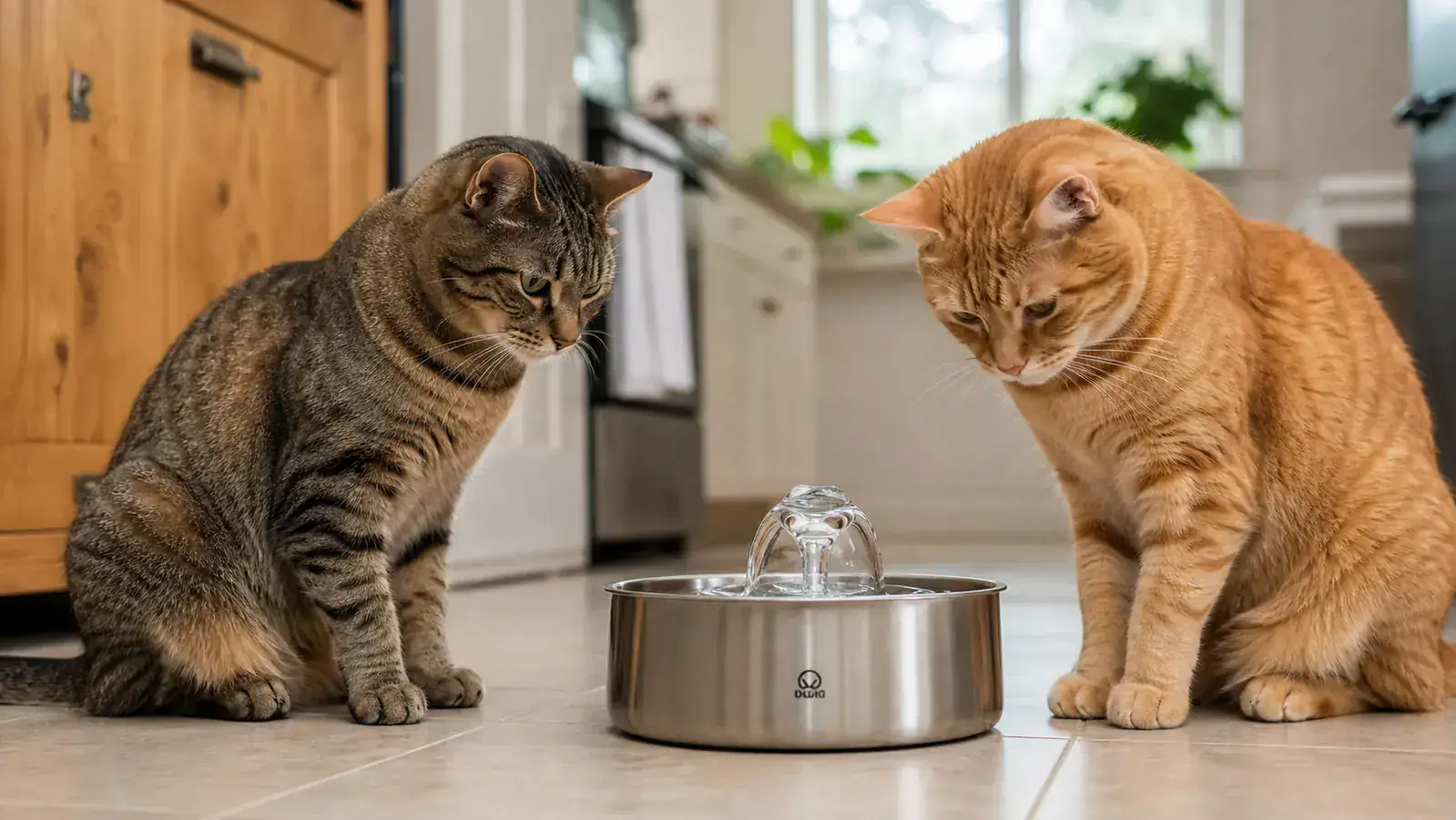
Pesto and Fig, my two cats, had a well-documented drinking problem. Not too much, the other kind. Their vet mentioned it at two consecutive annual check-ups: "These girls are a little dehydrated. Try to increase water intake." The second time he said it, in early February, he added that chronic low intake is one of the leading contributors to kidney disease in middle-aged cats. Pesto is 7 and Fig is 5. I started taking it seriously.
I had tried a ceramic bowl, a wide shallow dish (cats allegedly prefer those), a second water station across the apartment, and once, embarrassingly, a little fountain I bought at a craft store that was technically meant for desk zen gardens. None of it moved the needle. Then I picked up the Veken Stainless Steel Pet Water Fountain in mid-February. Four months later, here is everything I know about it.
The Quick Verdict
A well-made stainless fountain that genuinely gets reluctant cats drinking more, with one honest catch: the filter schedule is more demanding than the box suggests.
Amazon Check Today's Price →If your cat's vet has flagged low water intake, this is the one I would start with.
The Veken stainless holds 108 oz, runs near-silently, and has 17,000+ Amazon reviews from people in the exact same boat I was in. Check the current price before you decide.
Amazon Check Today's Price on Amazon →How I Set It Up and Started Tracking
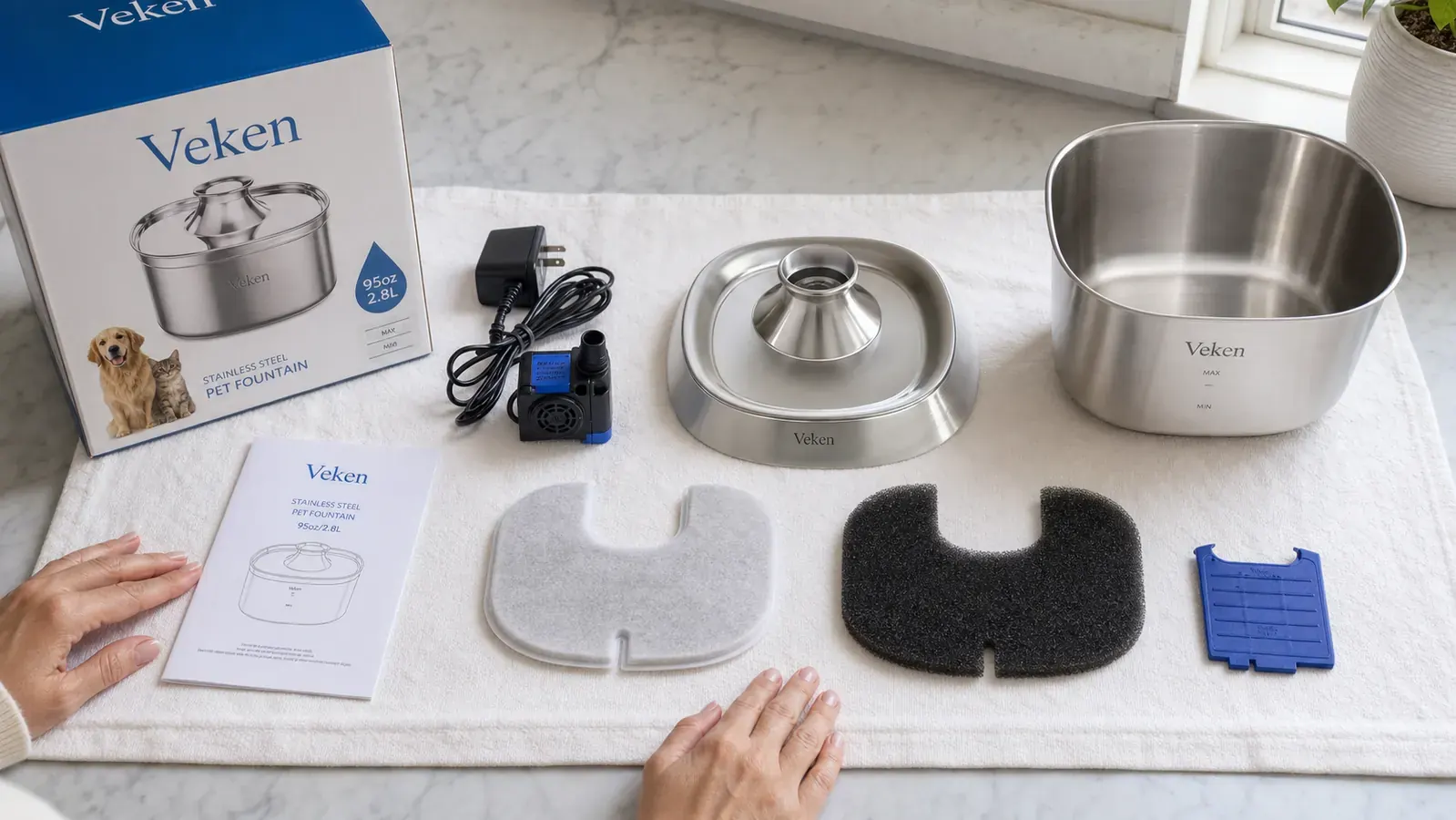
Out of the box the Veken took about twelve minutes to assemble. The stainless basin, the plastic inner housing, the pump, the foam pre-filter, and the carbon filter all snap or seat together without tools. I rinsed everything twice before filling because the carbon filter can leave a faint gray tinge in the first fill. The instructions mention this. I topped it to the max line, plugged it in, and put it in the same corner where the old ceramic bowl had lived.
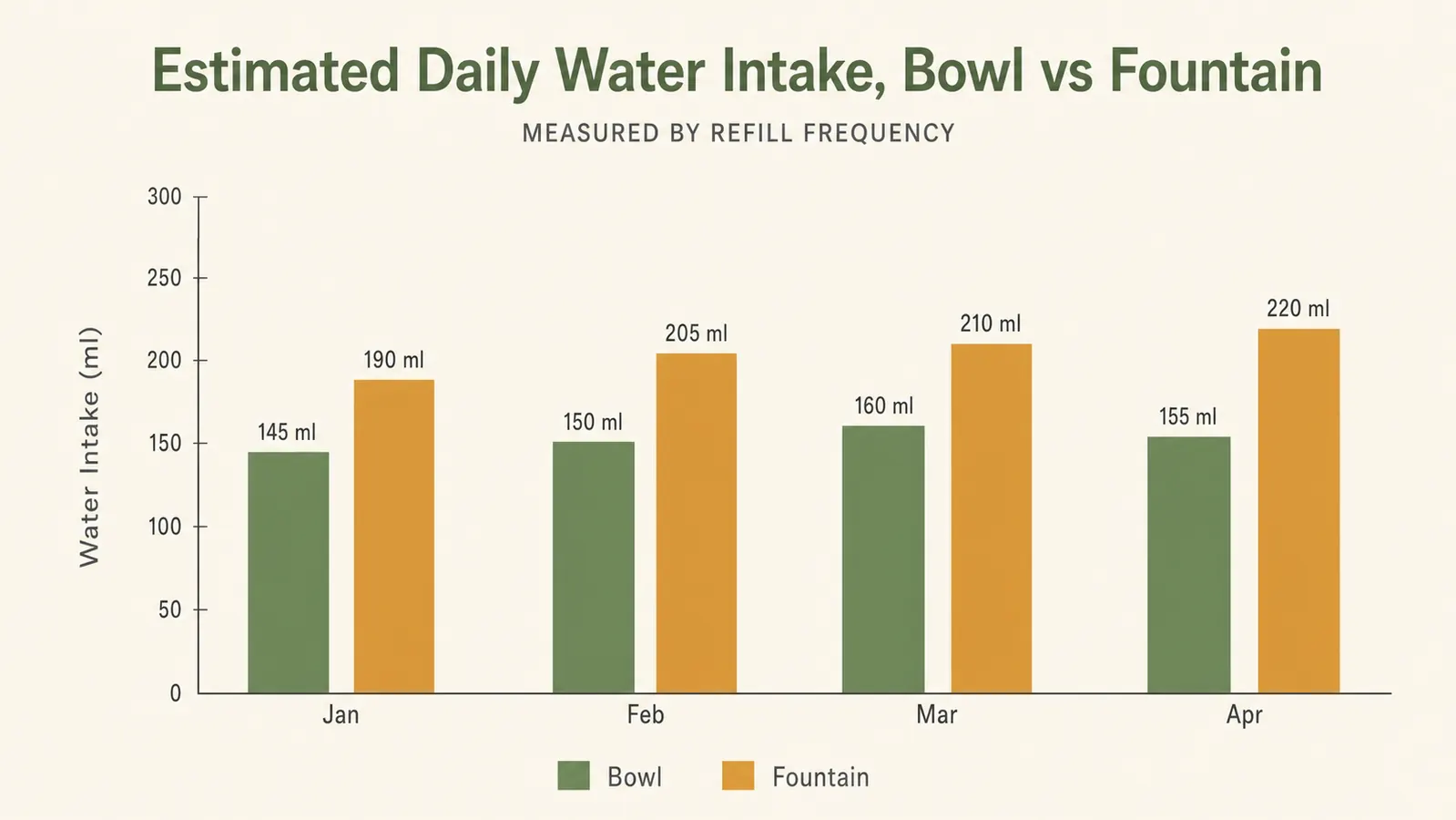
Fig approached it in about four minutes. She sniffed the flowing dome, batted it twice, then drank. Pesto took three days. She would sit at a distance and watch it like it owed her an apology. On day four she gave in. Within two weeks both cats were visibly drinking from it multiple times a day. I was tracking by how often I needed to refill the 108 oz reservoir. With the ceramic bowl I refilled a 20 oz bowl once daily and frequently found it still half full in the evening. With the fountain I was refilling the full 108 oz reservoir every four to five days, which told me intake had roughly doubled.
I kept a rough log in my phone notes: refill date, approximate oz added, anything notable about behavior. Not scientific, but useful enough to see a trend. By the six-week mark, Pesto's litter box output had noticeably increased, which my vet had said was the clearest home indicator of improved hydration. That was the moment I stopped second-guessing the purchase.
What the Stainless Steel Actually Means in Practice
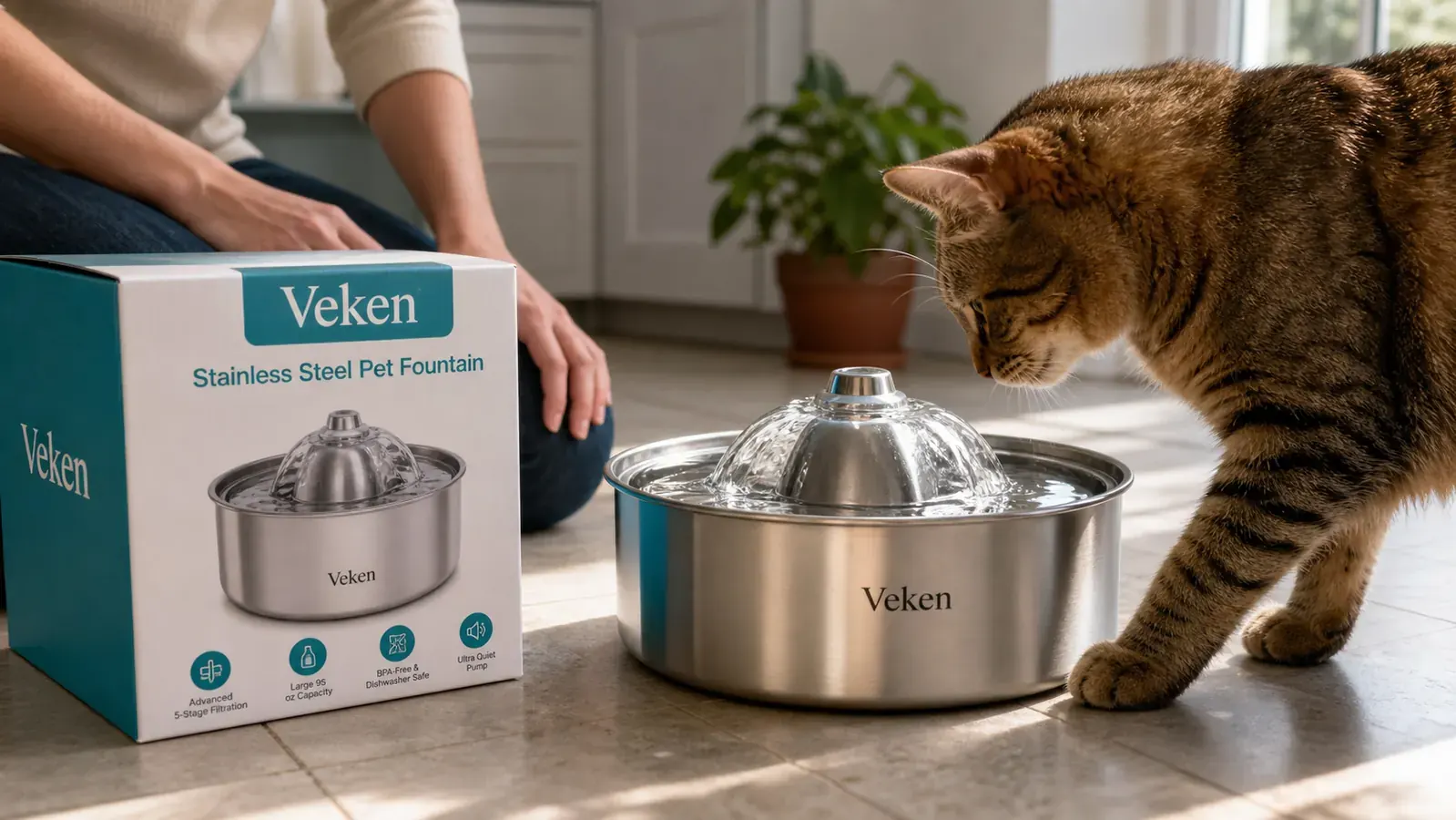
Most fountain reviews spend a lot of time on the stainless-versus-plastic debate, so let me give you the practical version. The exterior of the Veken is brushed stainless steel. The inner basin that holds the water is also stainless. The pump housing, impeller cover, and the top dome are plastic. So the water-contact surfaces are mostly stainless with some plastic components that you can see if you take the fountain apart.
Why does this matter? Plastic bowls and fountains can develop micro-scratches over time and harbor bacteria in those scratches. They also sometimes leach a faint plastic taste that cats, with their sensitive noses, will reject. The stainless surfaces stay smooth and do not hold smell or flavor the way plastic does. I noticed after about six weeks that the stainless basin had essentially no odor when I picked it up to clean, while the old plastic bowl I had used previously always had a faint smell by day three even when it looked clean.
If your cat has ever refused a plastic bowl that seemed clean to you, the stainless upgrade is probably worth it. If your cat happily drinks from whatever you put down, you may not notice a difference.
By week six, Pesto's litter box output had noticeably increased. That was the moment I stopped second-guessing the purchase.
Noise, Pump, and the Everyday Experience
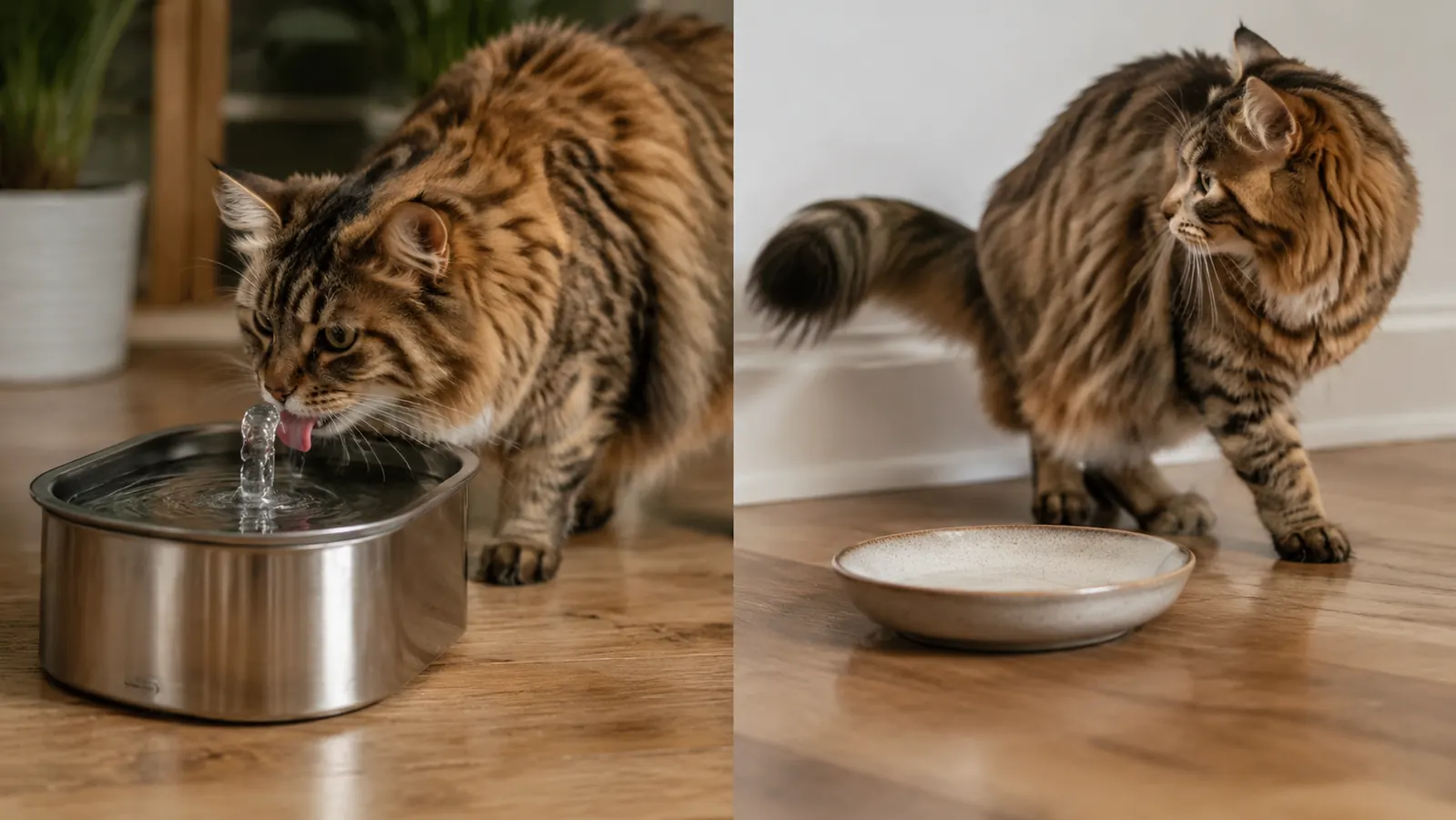
The Veken runs quietly enough that I genuinely forget it is on. At a normal room volume I cannot hear the pump from six feet away. The water flow over the dome makes a soft trickle that is actually pleasant to fall asleep to since the fountain is in my bedroom hallway. If you have a cat that is noise-sensitive, this would not startle them. The only time the pump became noticeable was when the water level dropped below the minimum fill line, at which point it produced a faint high-pitched whine. The fix is obvious: refill it. But if you are away for a few days and water evaporates past that line, you will come home to an annoyed-sounding fountain.
The flow rate is adjustable via the pump dial, which gives you three settings from a gentle ripple to a more active stream. Both cats preferred the middle setting. At the highest setting the dome overflows slightly aggressively, and Fig would back away from it. Middle setting is what I have left it on since week two.
The Filter Schedule Is the One Real Catch
Here is the part the marketing materials underplay. The Veken uses a two-part filtration system: a foam pre-filter that catches hair and debris, and a carbon filter that removes chlorine, odors, and some impurities. The box says to replace the carbon filter every four to six weeks and rinse the foam pre-filter every two weeks. In practice, with two cats, I found those timelines too generous.
By week three of each cycle, the foam pre-filter was visibly loaded with cat hair. The carbon filter by week four had a faint musty smell that I could detect when I leaned close. I now rinse the foam pre-filter weekly and swap the carbon filter every three weeks. Replacement filters are sold in multi-packs on Amazon and the cost works out to roughly four to six dollars a month depending on the pack size you buy. That is not a dealbreaker, but it is a real ongoing cost that you should factor in.
If you skip filter maintenance, the water quality degrades, the pump strains, and cats will often stop using the fountain. I have read enough one-star reviews blaming the product for cat rejection to believe most of them were actually filter neglect problems. Keep up the maintenance and the fountain keeps delivering.
Cleaning the Full Unit
I do a full disassembly clean every two weeks. Everything except the pump comes apart easily, and the stainless surfaces wipe clean with a damp cloth and a drop of unscented dish soap. The plastic dome and inner housing take a little more scrubbing to get into the crevices around the flow channel. A bottle brush helps. The whole process takes about fifteen minutes once you have done it a couple of times. The first time took closer to thirty because I was figuring out reassembly order.
The pump needs cleaning separately about once a month. You pull the impeller out, rinse it, clear any hair from the intake, and let it dry before reassembly. Veken includes a small cleaning brush specifically for the pump, which is a nice touch. I have seen cheaper fountains that do not include any cleaning accessories at all.
Four Months Out: What Has Actually Changed
At the four-month mark both cats had follow-up bloodwork as part of their annual exams. Both came back with kidney values in the normal range. Pesto's creatinine, which had been on the high end of normal last year, came back more comfortably mid-range. I am not attributing that entirely to the fountain. Diet, stress, and other factors all play a role. But my vet noted the improvement and asked what I had changed. When I mentioned the fountain, she said "good, keep it up."
Beyond the bloodwork, the behavioral change has been the most convincing data point for me. Both cats now visit the fountain unprompted throughout the day. I have watched Fig take a drink, walk away, come back five minutes later, and drink again. That is not behavior either of them ever exhibited with a static bowl. Moving water triggers something in cats that still water does not, and if you want a deeper look at the biology behind that, I wrote more about it in my piece on the 10 reasons cats need a pet water fountain.
What I Liked
- Stainless steel water-contact surfaces stay cleaner and odor-free longer than plastic
- 108 oz capacity means refills only every four to five days with two cats
- Near-silent pump at normal water levels, three adjustable flow settings
- Both reluctant cats began drinking noticeably more within two weeks
- Comes with a cleaning brush for the pump, which most competitors skip
- Assembly and disassembly are intuitive after the first clean
Where It Falls Short
- Filter replacement is needed more frequently than the box suggests, especially with multiple cats
- Ongoing filter cost of roughly four to six dollars per month
- The plastic dome and inner housing do require a bottle brush to clean properly
- If water drops below the minimum fill line, the pump whines audibly
- Cautious cats may take several days to approach it, which can feel discouraging
Who This Is For
This fountain is the right call if your vet has flagged low water intake in your cat, if you have tried a standard bowl and your cat ignores it half the time, or if you have had plastic fountain issues with smell or your cat rejecting it after a few weeks. It is also a solid choice if you have two or more cats, because the 108 oz capacity means you will not be running to refill it every day. The stainless construction genuinely makes a difference for multi-cat households where one fountain has to work hard every day.
If you are curious about how a fountain compares to simply switching to a better bowl setup before committing, I did a full breakdown on that in my comparison of a pet water fountain versus a ceramic water bowl. That article gives you the honest case for both options so you can decide what fits your situation.
Who Should Skip It
If you have a single, already well-hydrated cat who drinks reliably from a bowl, the upgrade is probably unnecessary. The maintenance commitment is real, and if you are not consistent about it, the fountain will underperform and your cat will reject it. If you travel frequently and have no one to check the water level, a fountain can run dry faster than a topped-up bowl, which creates both a pump problem and a thirsty cat. For travelers, a timed auto-refill bowl may be a more practical solution.
I would also skip it if you are on a very tight budget and resistant to ongoing costs. The fountain itself is reasonable at current pricing, but the filter expense adds up. Do the math before you buy: if you are replacing filters every three weeks, that is a real commitment. For most cat owners the health benefit justifies it easily, but go in with your eyes open.
Four months in, I would buy this again without much debate.
The Veken stainless fountain is the thing that finally got Pesto and Fig drinking the way their vet wanted. With 17,000+ ratings on Amazon and stainless construction that actually stays clean, it is the fountain I recommend to anyone whose vet has flagged hydration. Check the current price and see if it fits your situation.
Amazon Check Today's Price on Amazon →