
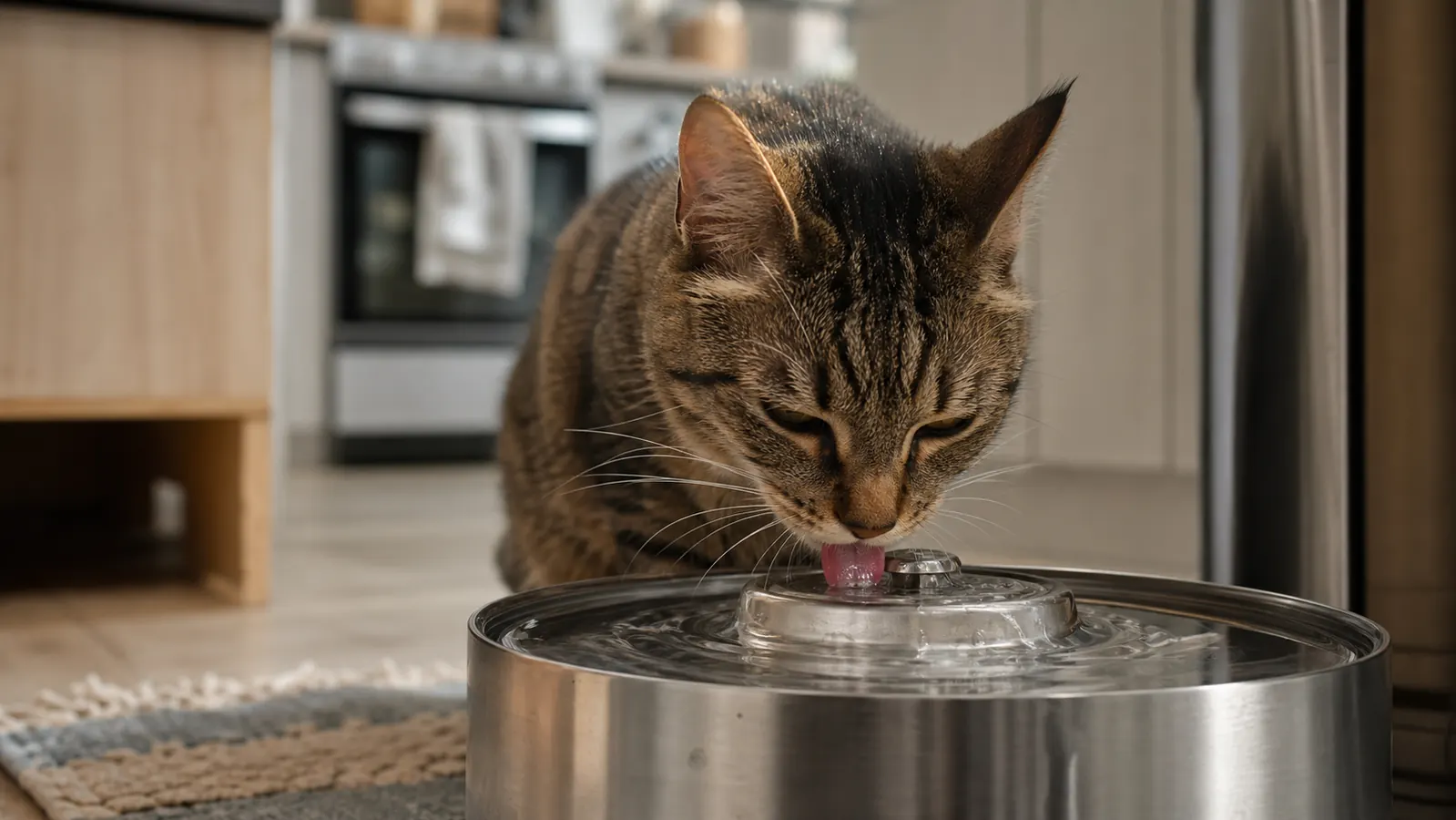
I had two cats for five years before I realized neither of them were drinking nearly enough water. They would walk past the bowl, sniff it, and walk away. My vet finally said it plainly: cats evolved in dry climates and their thirst drive is weak. They are designed to get moisture from prey, not from standing water in a dish. Once I understood that, a lot of things made sense, including why my older cat, Mango, kept getting urinary tract flare-ups. I added a running water fountain four months ago and the difference has been noticeable enough that I want to walk you through every reason this upgrade matters.
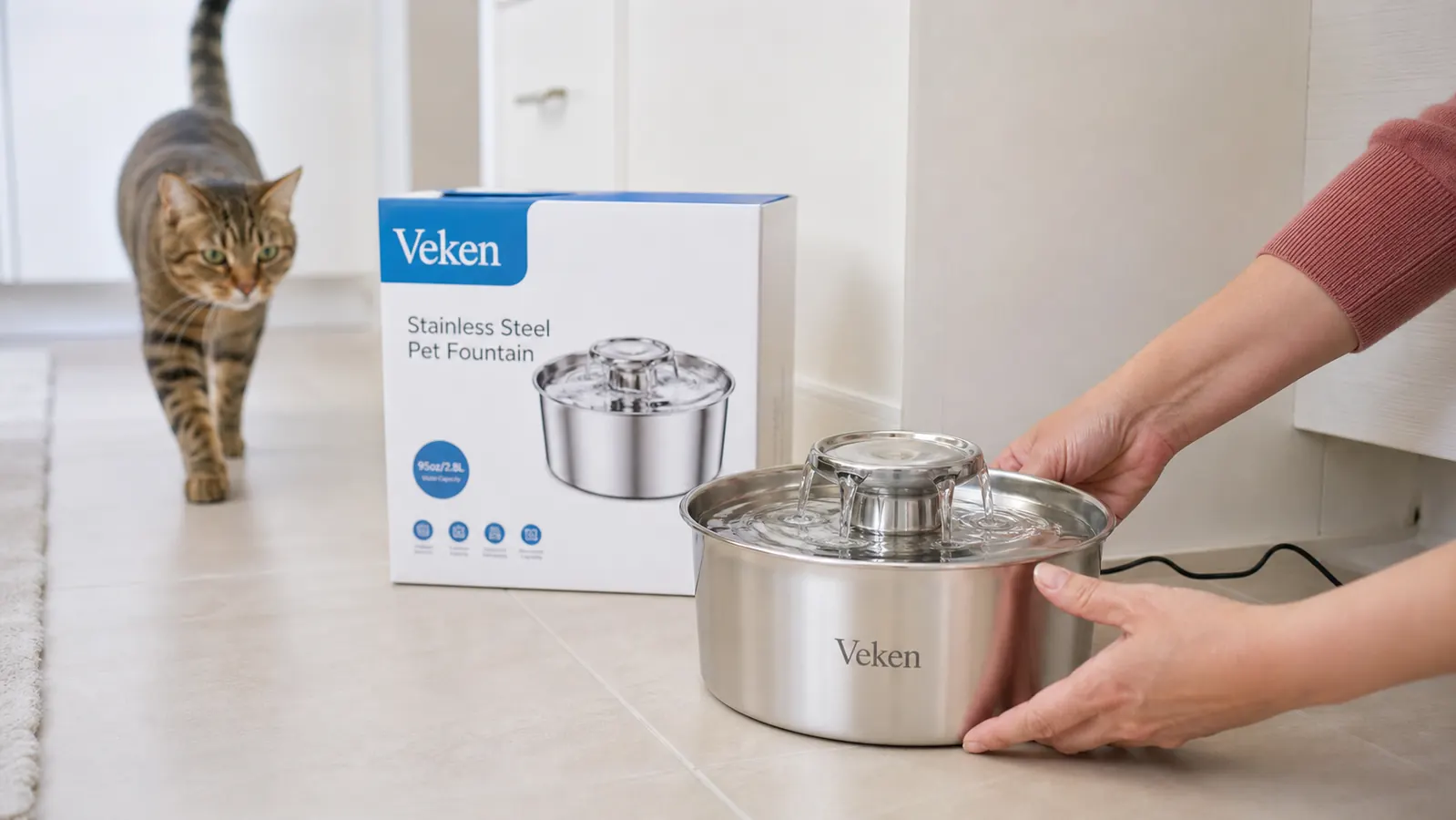
The fountain I use is the Veken stainless steel model, 108 ounces, with a quiet pump and replaceable carbon filters. It rated 4.4 stars across more than 17,000 Amazon reviews, and after four months I understand why. Here are ten reasons I think every cat household should have one.
If your cat walks past their water bowl, a fountain is the fix.
The Veken stainless fountain holds 108 oz, runs quietly overnight, and ships with two replacement filters. Check the current price on Amazon before it sells out in your size.
Amazon Check Today's Price on Amazon →Running Water Triggers Their Natural Instinct to Drink
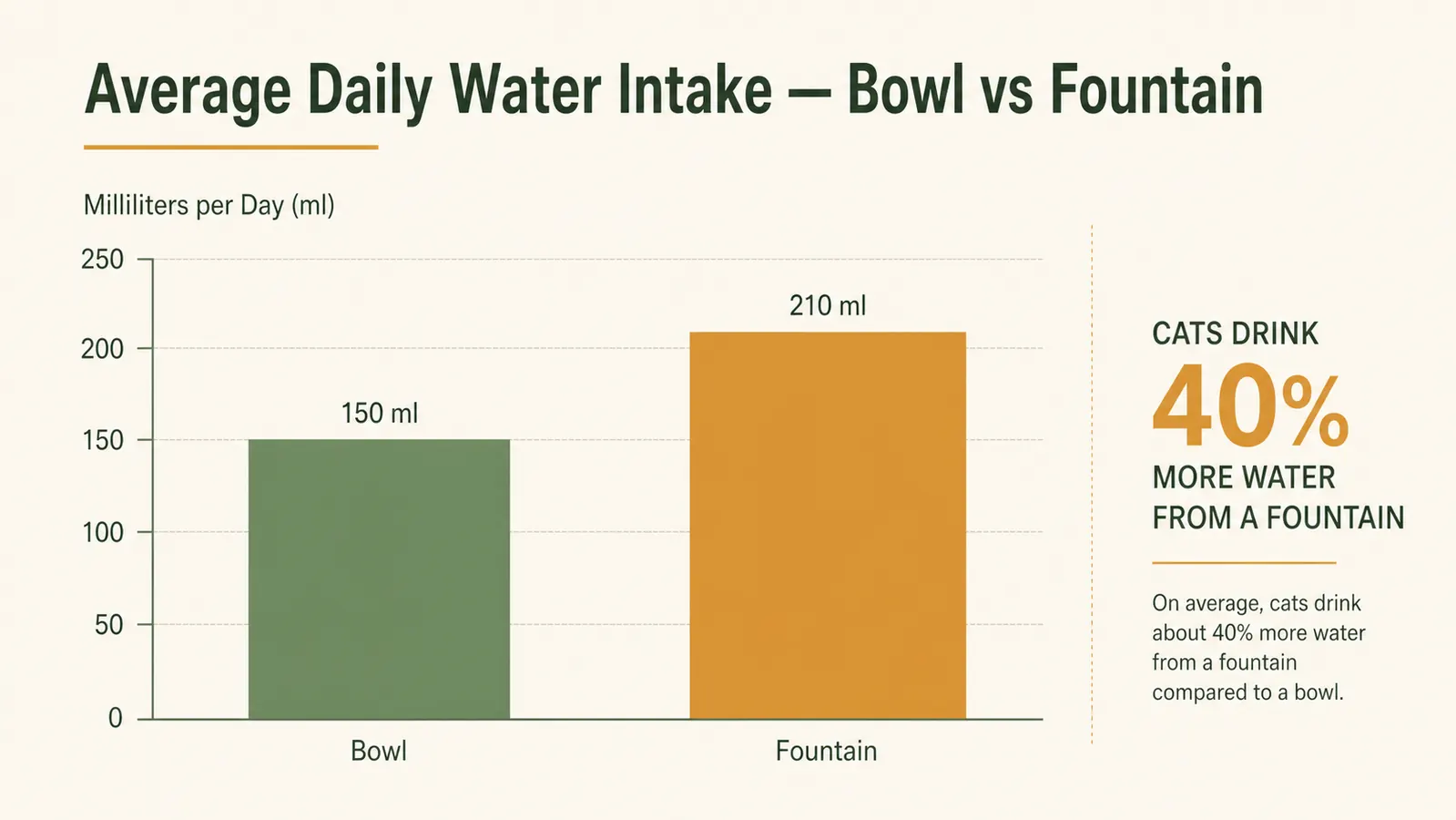
Cats instinctively distrust still water. In the wild, stagnant water is more likely to harbor bacteria or parasites. Moving water signals freshness, and that signal is still hardwired into your indoor cat. When the fountain is running, Mango comes over on her own. With the bowl, I had to practically beg. This single behavior shift is the reason most cat owners notice an uptick in drinking within the first day or two of introducing a fountain.
It Dramatically Reduces the Risk of Kidney Disease
Chronic kidney disease is one of the leading causes of death in cats over ten years old, and chronic dehydration is a primary driver. Kidneys need water to flush waste. When a cat is even mildly under-hydrated day after day, the kidneys work harder and eventually start to fail. Veterinary internists consistently point to low water intake as a modifiable risk factor, and a fountain is one of the most practical ways to address it. I think of the fountain cost as a fraction of one emergency vet visit.
It Lowers the Chance of Painful Urinary Blockages
Urinary blockages are more common in male cats and can become life-threatening within 24 to 48 hours. Concentrated, low-volume urine creates the conditions where crystals and sediment form. Keeping urine diluted through steady water intake is one of the first things a vet recommends after a blockage episode. The fountain makes it easier for your cat to drink consistently throughout the day rather than in one or two quick sessions at the bowl.
The Carbon Filter Actually Improves Taste
Tap water often carries chlorine and small sediment particles that cats can detect far better than we can. The Veken uses a replaceable carbon filter that removes those odors and particles. My second cat, Fig, is the picky one. He used to sniff the bowl and leave. He drank from the fountain within twenty minutes of us setting it up. The filter is a real part of why fountains outperform bowls for finicky drinkers, not just a marketing bullet point.
It Keeps Water Cooler and Fresher Than a Static Bowl
A bowl sitting out all day collects dust, cat hair, and bacteria from repeated contact with a cat's chin and whiskers. The circulating pump in a fountain keeps water moving, which slows bacterial growth and keeps the temperature closer to ambient room temperature rather than warm from sun exposure. You still need to clean the fountain weekly, but the baseline quality of water between cleanings is meaningfully better than what sits in a bowl.
Mango had her third urinary flare-up in fourteen months. My vet said the single most impactful change I could make at home was to get them drinking more water. The fountain was the only thing that actually worked.
Stainless Steel Does Not Harbor Bacteria Like Plastic Does
Plastic bowls and plastic fountains develop micro-scratches over time, and bacteria settle into those scratches in ways that normal rinsing does not remove. Cats who drink from plastic bowls also occasionally develop feline acne on their chins from bacterial contact. Stainless steel is non-porous, dishwasher-safe, and far easier to sanitize thoroughly. The Veken stainless body means I run the outer pieces through the dishwasher on Sundays and I am done.
The Quiet Pump Will Not Spook a Nervous Cat
I was worried about noise. Our apartment is small and I did not want a pump rattling all night. The Veken runs at a level I can only hear when the room is completely silent and I am standing right next to it. Both cats, including Fig who startles at everything, accepted it within a few hours. If your cat is sound-sensitive, this matters. Loud, gurgling fountains exist and they mostly end up getting returned.
A 108-Ounce Capacity Means Fewer Refills
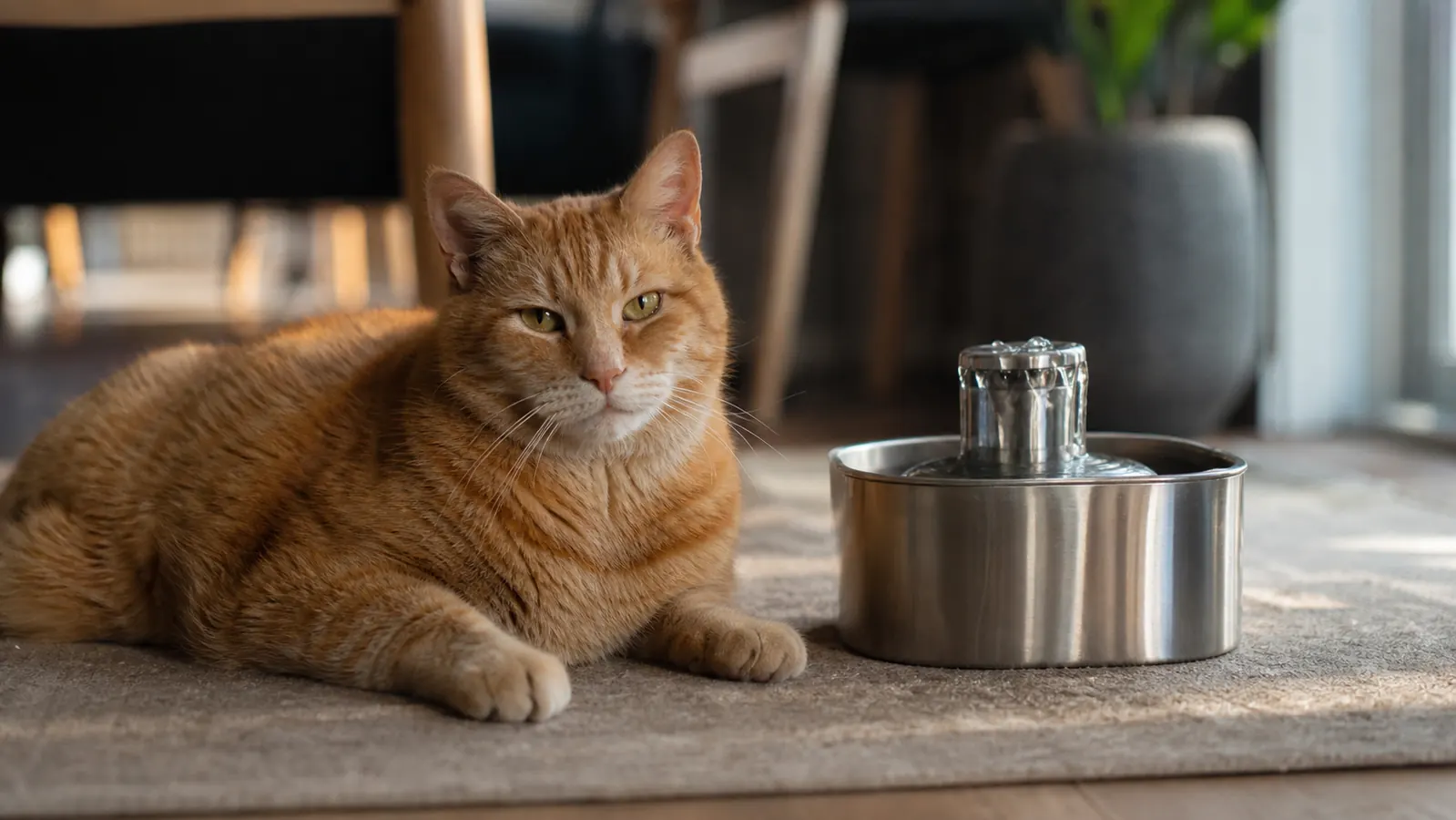
The Veken holds 108 ounces, which is just over three liters. For two cats, I refill it every two to three days. A standard bowl holds maybe 12 ounces and dries out or gets too dirty to leave overnight. The larger capacity also matters if you travel for a day or have someone stopping in to check on your cat. It is not a substitute for a cat sitter on longer trips, but it takes one worry off the list for short absences.
Cats on Dry Food Need It the Most
Dry kibble contains roughly 10 percent moisture. Raw prey contains around 70 percent. Cats eating primarily dry food are relying almost entirely on their water bowl (or fountain) to meet their hydration needs, and their thirst drive often does not compensate fully. If your cat eats dry food and drinks from a static bowl, the odds are good they are chronically under-hydrated. Switching to a fountain is the lowest-effort, highest-impact change you can make without overhauling their whole diet. For more ideas on getting a dry-food cat to drink more, see my guide on how to get a finicky cat to drink more water.
It Costs Less Than One Vet Visit for a UTI
A single feline urinary tract infection, treated with antibiotics and a vet exam, typically runs $150 to $300. A blockage requiring hospitalization can reach $1,500 or more. The Veken fountain costs less than most office visit copays. I am not saying a fountain prevents every health problem, but when my vet told me increased water intake was the single biggest preventive measure I could take for Mango, spending that much on a fountain was not a hard decision. Four months in, no flare-ups. That is the real return on investment.
What I Would Skip
Not every fountain is worth buying. The cheap plastic models in the budget range tend to have loud pumps, crack at the seams, and develop biofilm quickly. I tried one before the Veken and returned it after two weeks. I would also skip any fountain without a replaceable carbon filter, because the taste improvement from filtered water is a real driver of whether your cat actually uses it. If you want the full breakdown on how the Veken performs over time alongside what I noticed in the first week, read my long-term review of the Veken stainless steel fountain.
The fountain is the one thing I tell every cat owner to buy first. Not a fancy toy, not an expensive bed. This. Because if your cat is not drinking enough, everything else is harder.
Four months in, both cats use it every day. Mango has not had a flare-up since.
The Veken stainless steel fountain holds 108 ounces, runs quietly around the clock, and filters chlorine taste out of tap water. It has 17,000 Amazon ratings and ships with two filters to get you started. Check today's price before stock on your preferred color sells out.
Amazon Check Today's Price on Amazon →