
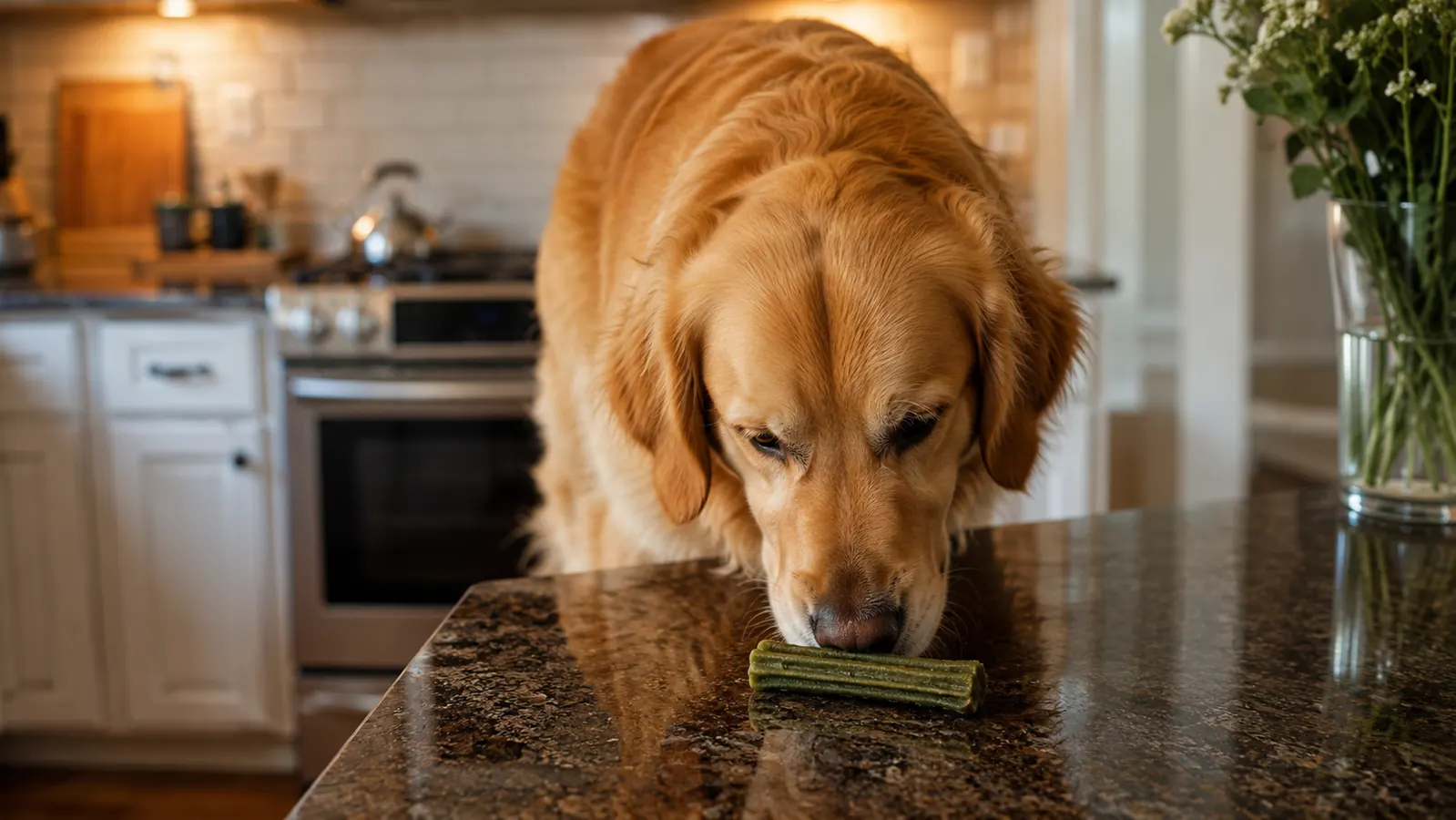
Here is the thing about a product with 35,000 Amazon reviews and a 4.8-star rating. At some point the number stops being reassuring and starts being suspicious. My neighbor Carla, who has owned three Golden Retrievers over twenty years and has opinions about everything pet-related, handed me a bag of Greenies at a block party and said, 'Just try them, you'll see.' I had a 3-year-old mixed-breed named Duke at the time, about 55 pounds, and his vet had mentioned his teeth were showing early plaque buildup. So I went home and looked up Greenies and saw all 35,000 reviews staring back at me, and I thought: there has to be a catch.
I bought them anyway. But I also called my vet's office and asked the technician some pointed questions. And I read through about forty of those one-star reviews on Amazon, which is something I recommend doing with any highly rated product because that's where the real information lives. What I found was more nuanced than either the glowing marketing or the most panicked one-star complaints, and I want to walk you through it here.
The Quick Verdict
Greenies are legitimately effective for daily dental maintenance and the VOHC seal is not marketing fluff. But the right size matters more than most people realize, the cost adds up faster than the packaging implies, and there are a few real limitations worth knowing before you commit to a daily habit.
Amazon Check Today's Price →If your vet has mentioned plaque or tartar in the last two checkups, this is the dental chew with actual clinical evidence behind it.
Greenies carry the Veterinary Oral Health Council seal, which means they've passed controlled studies on tartar reduction. Duke has eaten one every day without hesitation. Check the current Amazon price before buying at a pet store, the per-unit cost difference can be meaningful.
Amazon Check Today's Price on Amazon →What the Marketing Tells You and What It Leaves Out
The Greenies packaging leads with 'veterinarian recommended' and 'VOHC accepted,' and both of those are real claims worth caring about. The Veterinary Oral Health Council is an independent organization that reviews clinical trial data before certifying any dental product. They require a product to demonstrate at least 10 percent reduction in tartar or plaque accumulation in controlled studies. That is a real bar. A lot of the products in the dental chew aisle, including some big names, have not passed it. Greenies have. That certification is one of the two reasons I kept buying them past the first bag.
Here is what the marketing skips over. First: the VOHC seal does not mean the product replaces brushing. It means it reduces accumulation at a measurable rate, not that it eliminates the need for any other dental care. Second: the product works because of its texture and mechanical action, not because of any active chemical ingredient. The chew flexes and bends around the tooth surface as the dog bites down, scrubbing the enamel in a way a biscuit or a rawhide doesn't. That means the dog actually has to chew it, not swallow it in two bites, for it to work at all. If your dog is a known gulper, that is the central variable the packaging doesn't address.
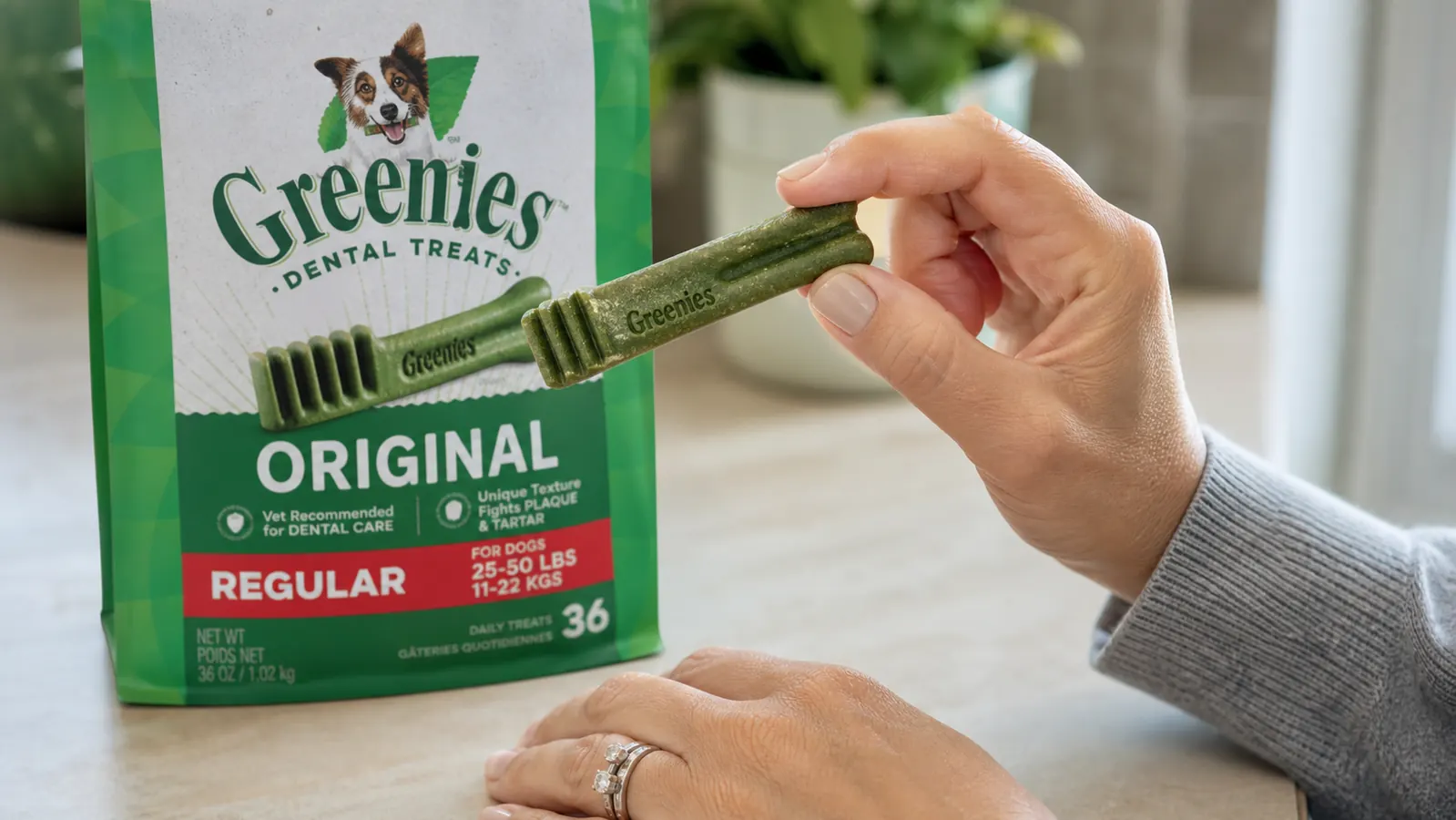
Third, and this one I found by reading one-star reviews: the serving size is strictly by weight, and people regularly buy the wrong size for their dog. A Petite chew is rated for dogs five to fifteen pounds. A Regular is for dogs twenty-five to fifty pounds. Duke is 55 pounds, which puts him in Large territory even though he looks like a 'Regular size dog' to anyone who doesn't check the chart. Buying one size too small is not just inefficient for dental cleaning; it's also a potential safety issue with dogs who swallow quickly.
The Gulping Issue Is Real, but It's Also Manageable
Most of the horror stories in the one-star reviews follow the same pattern: dog swallowed a large piece whole, developed gastrointestinal distress, some had more serious blockage issues. Reading those reviews was what almost made me return the bag before Duke even tried one. So I called my vet's office and talked to the technician who handles their dental consults.
She told me two things. One: the reformulation that Greenies did years ago genuinely changed the digestibility profile. The older formula was denser and took longer to break down. The current formula is designed to pass through the digestive system safely even if a dog swallows a chunk. Two: the correct size for the dog matters more than people give it credit for. A dog who is given a too-small chew is far more likely to swallow it in one or two bites simply because it fits. A Large chew for a Large dog forces more actual chewing time because the chew is too big to swallow whole. She said her clinic recommends always supervising the first few sessions with any new chew, which is reasonable advice for any treat.
I supervised Duke for his first three chews. He gnawed each one for about ninety seconds, which the vet tech said is typical for his size. After that I stopped watching so closely, but I still make sure I give him the correct Large size. He has never had a digestive issue with them in the time I've been using them. That said, I would not give these to a dog who has a documented history of swallowing treats whole without supervising closely, and I'd probably talk to my vet about whether a different product would be safer.
The Real Cost of a Daily Habit
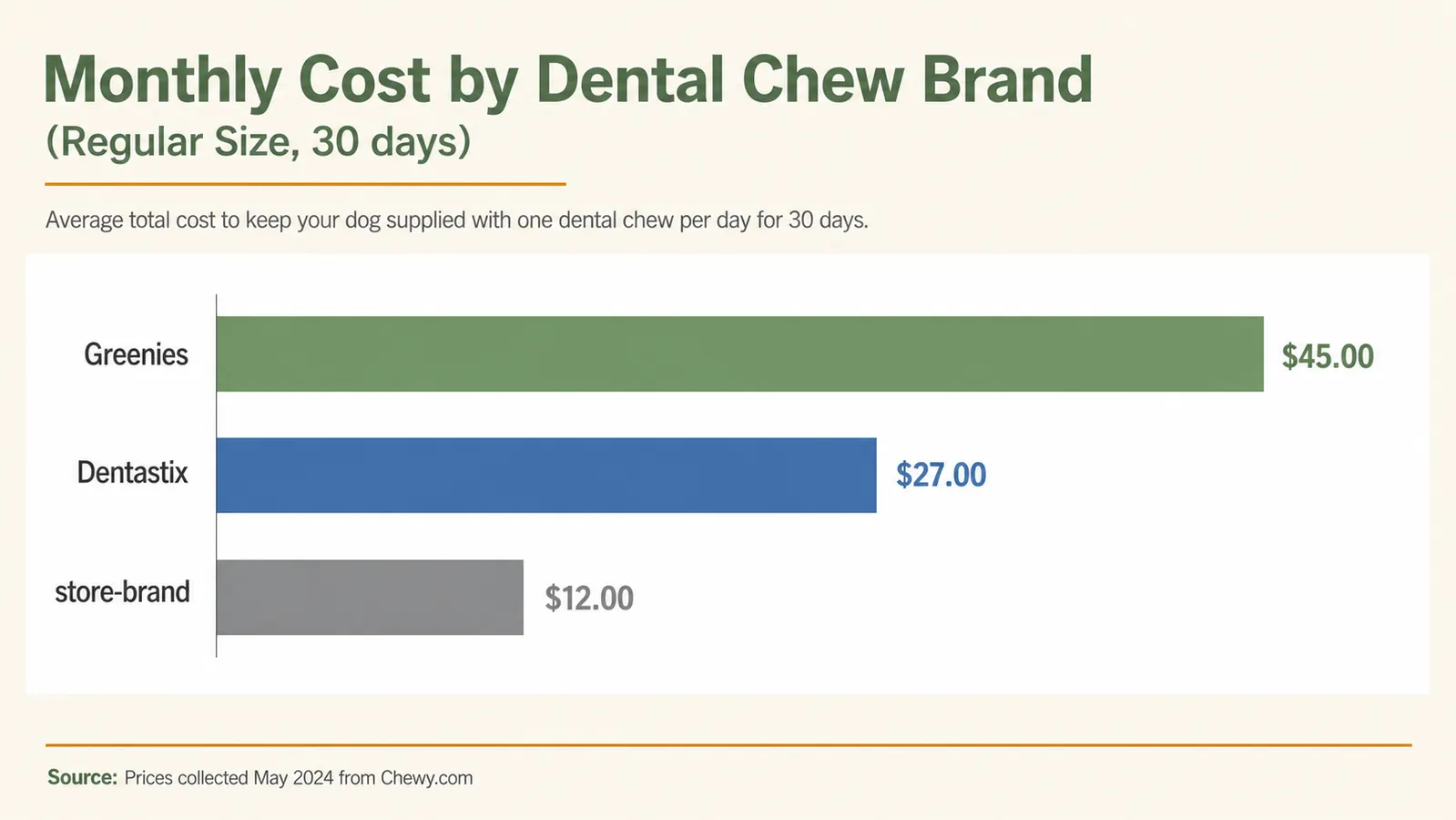
This is the part nobody does the math on at the pet store. Greenies are priced per bag, and the bag size varies depending on the size variant and the count. For Duke at Large size, a bag of 27 chews costs in the moderate range at current Amazon pricing. That works out to a modest cost per chew, which sounds modest until you add it up: a meaningful monthly expense, a significant annual cost. Over Duke's expected lifespan that is a real budget line.
Compare that to Dentastix, which runs more expensive per chew in bulk, or store-brand dental sticks that can run cheaper each. The gap is real. Whether it's worth it comes down to the VOHC certification question. Dentastix do not carry the VOHC seal for tartar reduction. They have a version accepted for plaque, which is a lower bar. If you want the full tartar-control certification with clinical evidence, Greenies is the product that has it in this price tier.
The other cost consideration: buying in bulk through Amazon's Subscribe and Save option typically cuts the per-bag price by 5 to 15 percent depending on how many subscriptions you have active. Over a year that can add up to a couple of bags worth of savings. I switched to Subscribe and Save after the second month and have not thought about it since. Auto-ordering one bag a month for a 55-pound dog works out almost perfectly.
I read through forty one-star reviews before I bought these. That is where the real information about any product lives, and what I found was more nuanced than either the glowing marketing or the most panicked complaints.
What My Vet Actually Said (Not What the Packaging Says She'd Say)
When Duke went in for his annual visit about four months after I started the daily Greenies habit, I asked his vet directly what she thought of them. Her answer was more specific than I expected. She said Greenies are one of a handful of products she actually recommends by name, as opposed to generically saying 'get some dental chews.' She cited the VOHC certification and the digestibility formula. She also said that daily use is what makes them work. Dogs who get them twice a week are not getting the same benefit as dogs who get one every day, because plaque starts forming again within 24 to 48 hours after a chew. Daily is the key word in the routine, not just 'regular.'
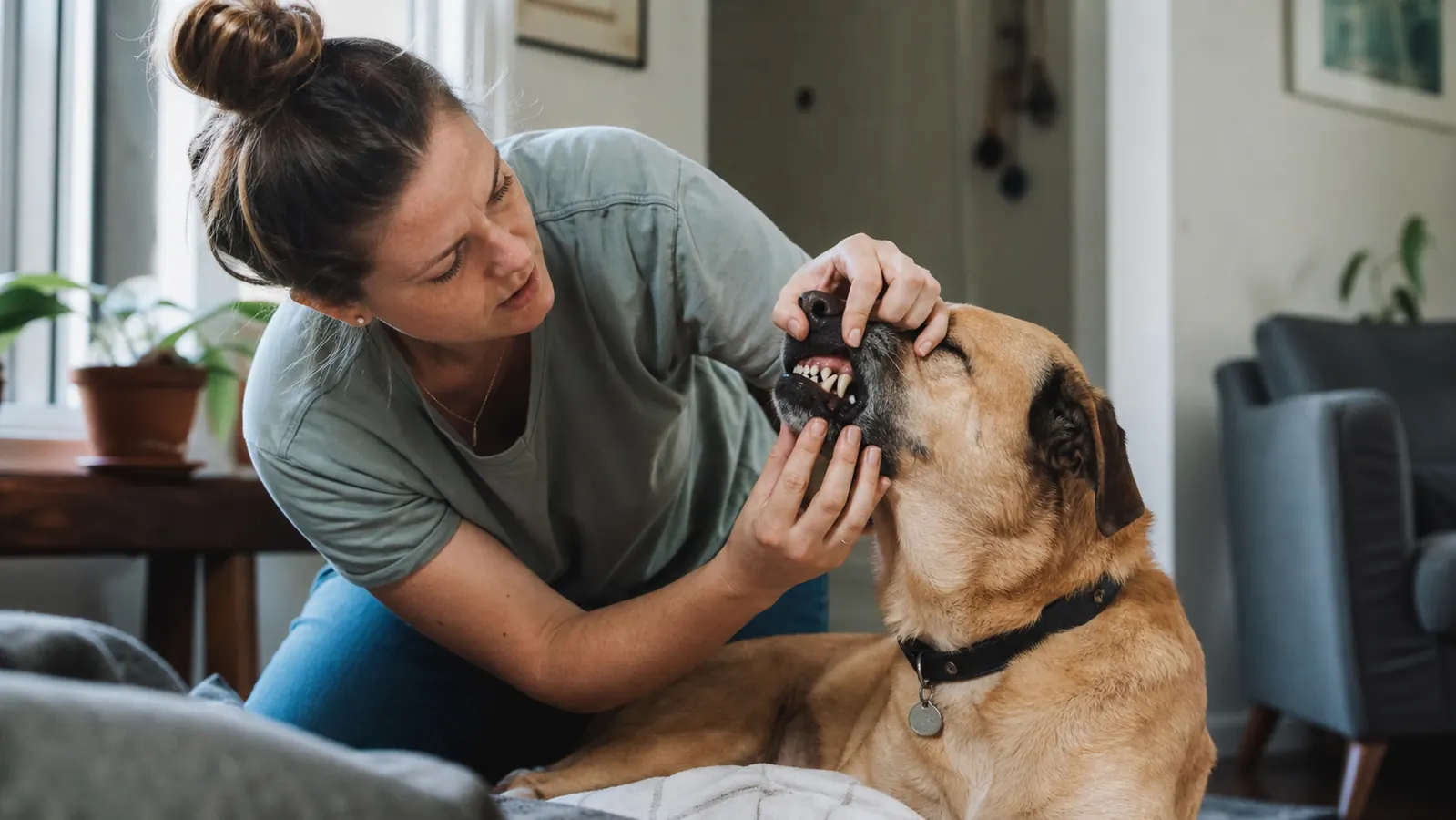
She also said, without me asking, that even daily Greenies do not fully substitute for professional cleanings in dogs who are already prone to calculus buildup. If your dog has a history of severe tartar accumulation, or a breed predisposition to dental disease like Yorkies, Maltese, or Chihuahuas, dental chews are a maintenance tool between cleanings, not a replacement for them. I appreciated her being specific about that rather than just endorsing the product.
What Happens If You Skip a Day (and Other Practical Notes)
One thing the packaging does not tell you: this is a daily commitment, and if you're inconsistent it will show up at the vet. I went on a ten-day trip and left Duke with my sister, who forgot to give him the chews for most of the stay. I didn't notice anything dramatic when I got home. But the vet pointed out at his next checkup that there was a slight increase in buildup on his back molars. Was that caused by the ten-day gap? I can't say for certain. But the timing was suggestive.
Practical notes that I wish I'd known at the start: store the bag sealed and in a cool spot. Left open on a counter the chews get stale faster than you'd think, and Duke stopped eating them enthusiastically from a bag that had been open for three weeks. Resealable clips or a dry container make a difference. Also, the chews have a calorie count that matters if your dog is on a weight-management plan. A Large Greenies chew is about 88 calories. For a 55-pound dog whose daily caloric target is around 1,000 calories, that's roughly 9 percent of the daily budget. If you're feeding a precise amount to manage weight, account for the chew.
Who Should Actually Buy Greenies
If you want the product with the strongest clinical evidence for daily tartar reduction in the over-the-counter dental chew category, and your dog chews rather than gulps, and you're willing to spend modestly per month and build a daily habit around it, Greenies are a genuinely solid choice. They work best as a daily routine, not an occasional treat. They work best in the correct size for your dog's weight. And they work best alongside regular at-home tooth inspection so you can catch any issues before the annual vet visit. If you want to understand what else belongs in that routine, the how to clean your dog's teeth without brushing guide covers the full toolkit.
What I Liked
- VOHC seal for tartar reduction backed by clinical trial data, not just marketing language
- Fully digestible formula that has improved significantly from the older version
- Vets actually recommend these by name, not just generically as 'dental chews'
- Dogs want to eat them every day, which is the only way to build the habit that makes them work
- Available in five sizes from Teenie to Large so you can correctly dose by weight
- Subscribe and Save through Amazon reduces the per-month cost meaningfully over time
Where It Falls Short
- More expensive than Dentastix or store-brand alternatives, roughly double the per-chew cost
- Requires daily use to work as described; two or three times a week does not produce the same result
- Size matching is critical and the consequences of getting it wrong are not minor
- Original formula contains wheat, not grain-free, so dogs with gluten sensitivity need the alternate version
- Each chew is consumed in 60 to 90 seconds for most dogs, which some owners feel is too short for the price
- Calories per chew need to be factored into the daily caloric budget, especially for dogs on weight management plans
Who Should Skip Them or Consider Alternatives
If your dog has a confirmed wheat or gluten sensitivity, the original formula is off the table. The grain-free Greenies variety exists and carries the same VOHC certification, but it costs more per chew and the flavor options are limited. If your dog is a known gulper who has had past digestive issues with treats, I'd have a conversation with your vet before starting any dental chew, not just Greenies. If budget is the primary concern and your dog has mild or no dental disease history, store-brand dental sticks are not nothing. They don't have the VOHC seal, but they provide mechanical cleaning and cost a fraction of the price. For the cost-vs-certification comparison between Greenies and their most popular competitor, the Greenies vs Dentastix comparison lays it out in detail.
Your dog doesn't care about the 35,000 reviews. They just want the treat. But you should care about the VOHC seal.
Greenies are the one dental chew I've found where the evidence matches the reputation. Duke has eaten one every day without complaint, and his vet stopped flagging his teeth at checkups. The current price on Amazon is worth checking, buying the right size and buying in bulk makes a real difference in the monthly cost.
Amazon Check Today's Price on Amazon →