
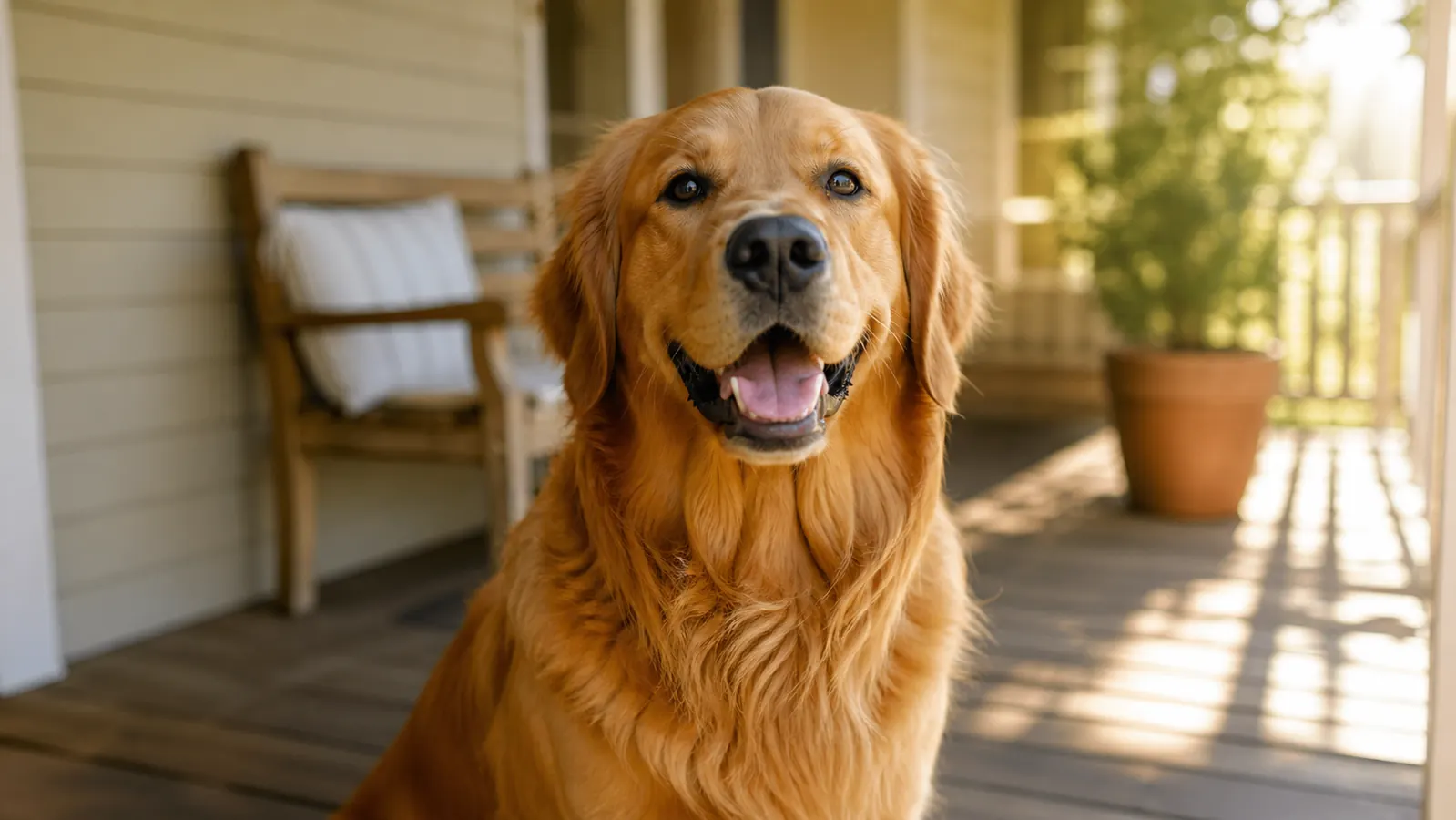
I have tried to brush my dogs' teeth. I have tried three different toothbrushes, two brands of chicken-flavored toothpaste, and one very expensive electric brush that my Lab Rudy treated like a personal threat. Every single time ended the same way: him in the corner, me with slobber on my shirt, and exactly zero plaque removed. If this sounds familiar, you are not alone. Most dog owners never establish a brushing routine that lasts, and most vets will tell you that honestly. The good news is that brushing is not the only way to protect your dog's teeth. There are several methods that work, and one of them does not require any cooperation from your dog at all.
Dental disease is the most common health problem vets see in adult dogs. By age three, around 80 percent of dogs already have some form of periodontal disease, according to the American Veterinary Medical Association. Left untreated, it causes pain, tooth loss, and can strain the kidneys and heart as bacteria enter the bloodstream. The stakes are real. But so is the fact that daily brushing simply does not happen in most households. This guide covers six practical methods you can use instead, ranked roughly by how much work they ask of you, starting with the easiest one to stick with.
The easiest method vets actually recommend: one chew per day
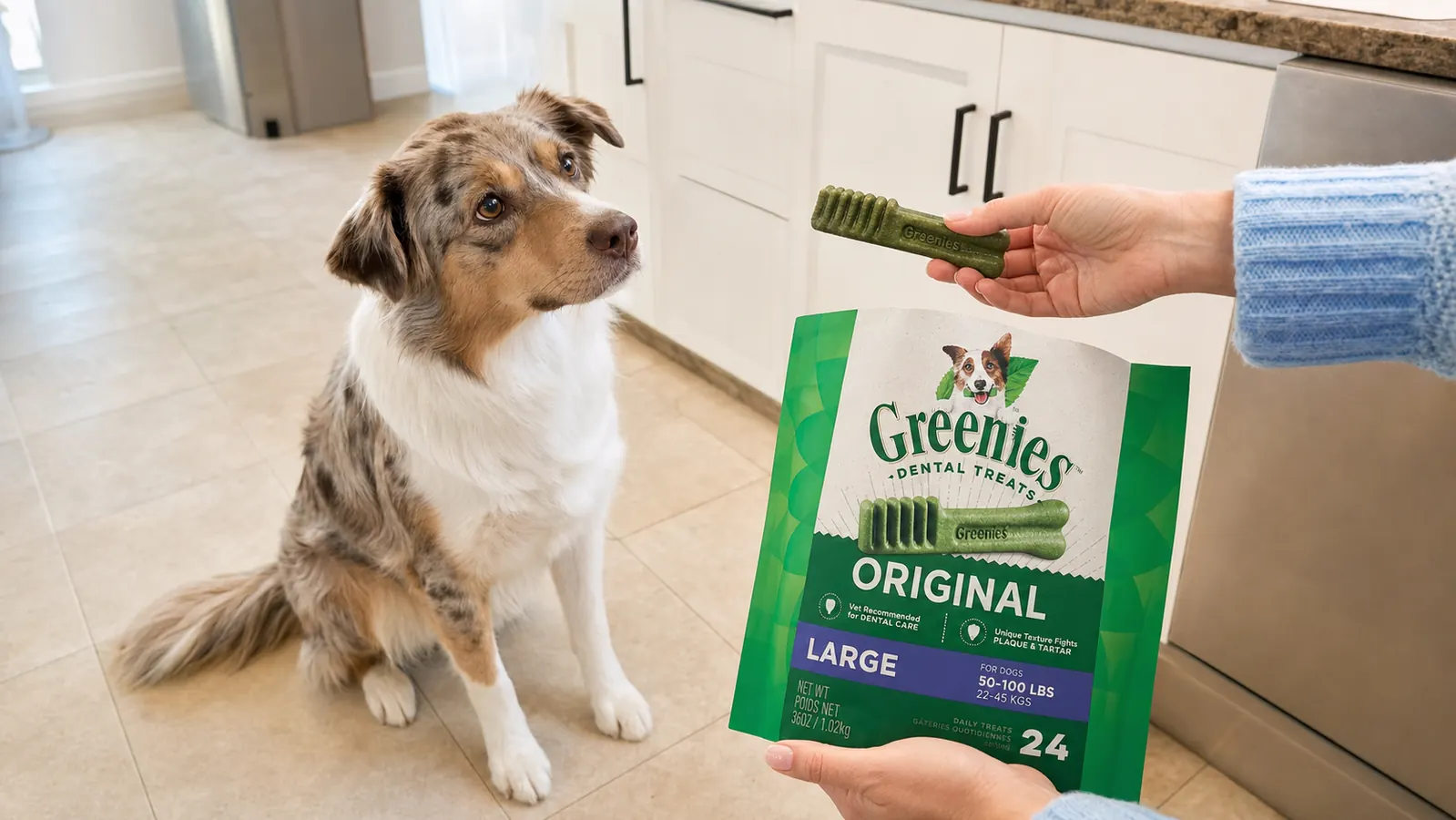
Greenies Dental Dog Treats carry a VOHC (Veterinary Oral Health Council) seal, meaning independent testing confirmed they reduce plaque and tartar. Rudy gets one after dinner every night. His last vet visit showed significantly less tartar buildup compared to the year before, when I was not consistent about anything.
Amazon Check Today's Price on Amazon →Step 1: Give a VOHC-Certified Dental Chew Every Day
If you only do one thing from this list, make it this one. VOHC certification is the key detail most people miss when shopping for dental chews. The Veterinary Oral Health Council reviews clinical studies before awarding the seal, so it is not just marketing. Greenies Regular size carries that seal, and the texture is specifically engineered to scrub against the tooth surface as the dog chews. Think of it the way a cracker cleans your teeth a little when you eat it, except the chew is designed for that exact purpose.
The catch is that consistency matters more than any individual chew. One dental treat once a week will not move the needle. One per day, given at the same time so it becomes a ritual, is what produces the results you see in the vet's office. I give Rudy his after dinner. He knows it is coming, he sits without being asked, and honestly it has become the easiest part of his whole care routine. He weighs 68 pounds, so we use the Regular size. Double-check the size chart on the packaging because under-sized chews get swallowed too fast to do any mechanical scrubbing.
One thing to watch: some dogs gulp treats rather than chew them properly. If yours does that, hold the treat loosely at one end for the first few seconds so they are forced to work on it rather than swallow it whole. You do not need to hold on tight, just enough resistance to encourage the chewing motion. After a couple of weeks most dogs figure out the routine and slow down on their own.
Step 2: Add a Dental Water Additive to the Bowl
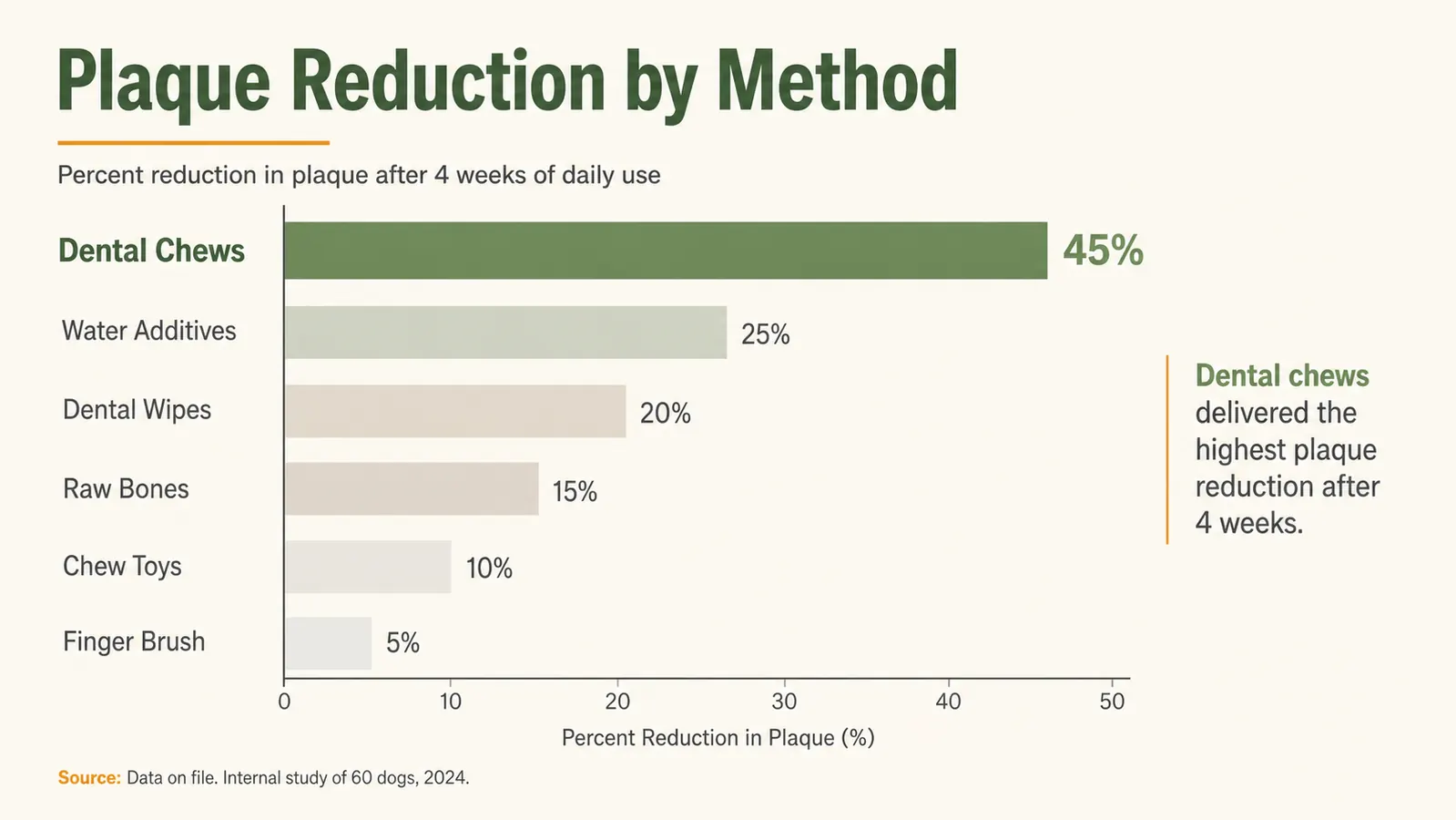
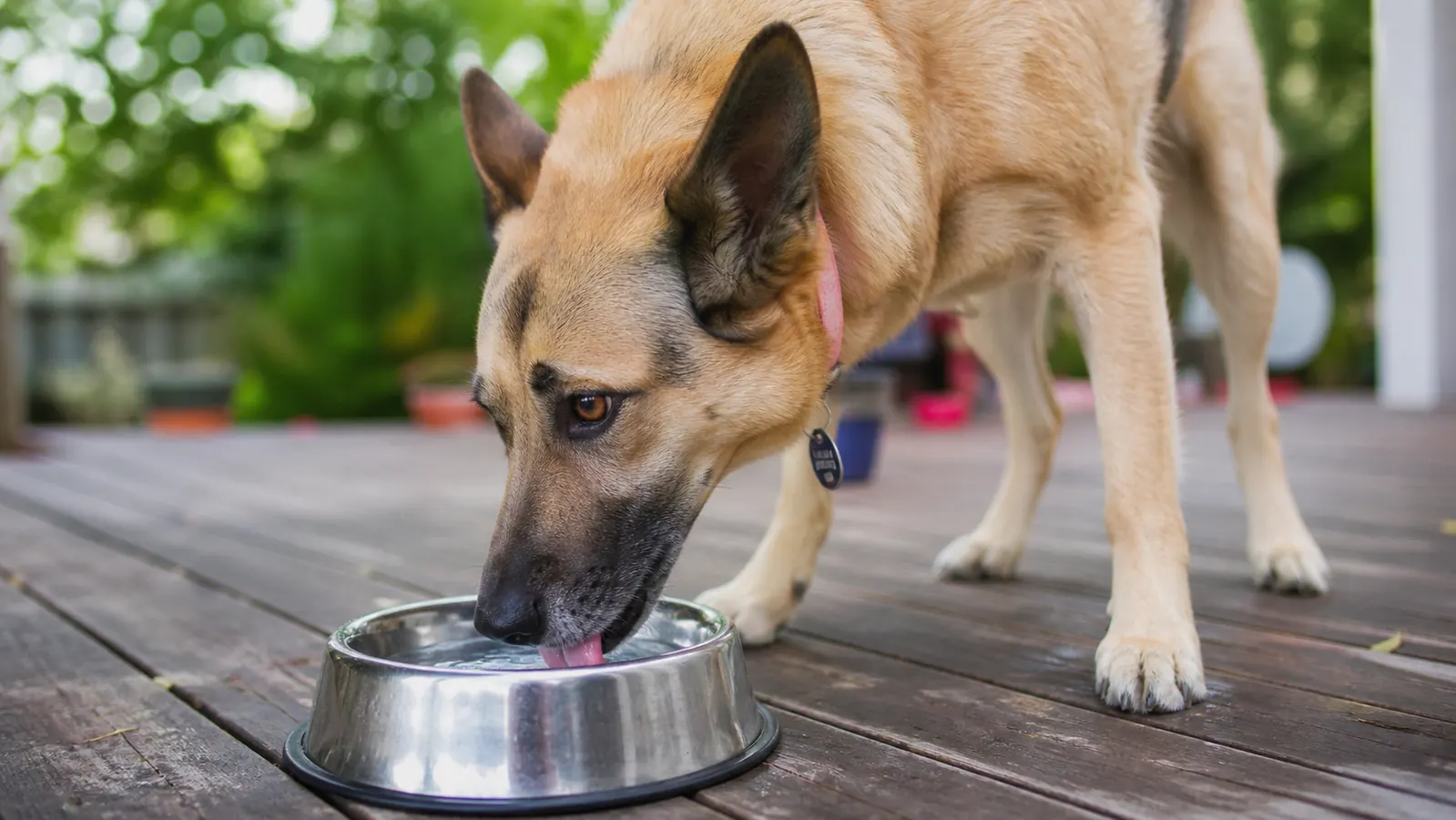
Water additives are the closest thing to a passive dental care method that exists. You pour a capful into the dog's water bowl each time you refill it, and the enzymes work on bacterial biofilm throughout the day. The dog does not notice anything different. The water usually has a very mild mint flavor that most dogs either ignore or seem to like. Vet's Best and Oxyfresh are two brands with decent research behind them.
I want to be honest about what water additives actually accomplish. They are better at freshening breath than at removing existing tartar. If your dog already has significant buildup, the additive alone will not reverse it. It works best as a maintenance tool alongside something more mechanical, like a dental chew. Think of it as mouthwash that supplements brushing in humans, not a replacement for the brushing itself. That said, used consistently alongside Step 1, it does make a noticeable difference in breath within the first week or two.
Step 3: Use Dental Wipes Two to Three Times a Week
Dental wipes are gauze-like pads you wrap around your finger and rub across the tooth surface. They are not as thorough as a toothbrush because they cannot reach into the grooves between teeth, but they are far more tolerable for most dogs. The motion is gentler, you have more control, and many dogs that will not tolerate a brush will accept a finger. Start by letting your dog sniff the wipe, then touch the outside of the upper back teeth first, which is where tartar accumulates fastest. Spend about ten seconds per side.
The key to making wipes work is not the product, it is the desensitization process. If your dog currently fights any kind of mouth handling, spend the first week just touching his lips and muzzle without opening his mouth. The second week, briefly lift the lip. The third week, introduce the wipe. Rushing this process is why most people fail. Go slowly and pair every session with a high-value reward immediately after. Within a month, most dogs reach a point where they tolerate it well enough that the whole routine takes under a minute.
Step 4: Offer Raw Meaty Bones or Appropriate Chew Toys
Chewing is how dogs were designed to keep their teeth clean before we domesticated them. Raw meaty bones like raw beef femur ends or raw chicken necks provide genuine mechanical scrubbing across the entire tooth surface, including the back molars that dental wipes often miss. The raw is important: cooked bones splinter and are a choking hazard. Raw bones are pliable enough to flex rather than shatter. Always supervise, and take the bone away when it gets small enough to swallow whole.
If raw bones are not something you want to deal with, there are rubber chew toys designed with ridges and nubs specifically to scrub teeth during chewing. The Benebone Dental Chew and similar products fall into this category. They are not as effective as VOHC-certified edible chews, but they extend the chewing time throughout the day and help with boredom, which is a secondary benefit. Look for toys that flex slightly under pressure. Anything rock-hard risks cracking a tooth, which is a vet bill no one wants.
Dental disease affects around 80 percent of dogs by age three. The fix does not have to be a toothbrush. It has to be consistent.
Step 5: Schedule a Professional Cleaning When Buildup Is Already There
I know this guide is about avoiding the vet's dental bill, but here is the honest truth: if your dog already has significant tartar, none of the at-home methods above will remove it. Calcified tartar is basically cement at that point. A professional cleaning under anesthesia is the only way to get back to a clean baseline. Once you are there, consistent daily maintenance keeps you from needing another cleaning as quickly. Think of the professional cleaning as the reset, and the chews, additives, and wipes as the maintenance program.
Ask your vet at your dog's annual exam to stage the periodontal disease (they use a scale of 0 to 4). Stage 0 or 1 means you are fine to manage at home. Stage 2 or above usually warrants a cleaning first. Once you know where you are starting, you can set realistic expectations for what the at-home routine will accomplish. Rudy was a Stage 1 when I finally got serious about his teeth at age five. Two years of consistent daily Greenies and water additives later, his vet called his teeth "surprisingly good for his age." That was the validation I needed.
Step 6: Try Enzymatic Toothpaste Without the Brush
Enzymatic toothpaste does not require scrubbing to work. The enzymes break down the bacterial film on tooth surfaces through chemistry rather than abrasion. If your dog will tolerate you applying paste to his teeth with your finger, even just rubbing along the gum line for thirty seconds, the enzymatic action continues working after you stop. Virbac and Petsmile are two brands with actual clinical backing. Never use human toothpaste on dogs. The fluoride and xylitol in human products are toxic to them.
This step works well combined with the dental wipe method. Apply enzymatic paste to a dental wipe and rub it along the upper gum line. You get both the mechanical action of the wipe and the chemical action of the enzymes. For dogs in the middle stages of the desensitization process who are not fully comfortable with extended mouth handling, this hybrid approach often gets better coverage in less time, which is a practical win.
What Else Helps
A few supporting habits that make the whole program work better. First, diet matters more than most people realize. Dogs that eat dry kibble get slightly more mechanical scrubbing than dogs eating soft food, though the difference is smaller than marketing suggests. More importantly, dogs eating a lot of soft food or table scraps accumulate plaque faster. If your dog is on a soft food diet for medical reasons, lean harder on the mechanical methods like dental chews and wipes to compensate.
Second, make the dental routine happen at the same time every day. Dogs thrive on schedule, and if the chew always comes after dinner, they will remind you when you forget. That consistency is what separates the households with healthy dog teeth from the ones that tried for a month and gave up. It does not need to be complicated. One Greenies chew per day, after the same meal, is a routine that takes five seconds to maintain once it is established. Start there. Add the water additive the following week. Add wipes the week after that. Building one habit at a time is what sticks.
Third, check the inside of your dog's mouth about once a month even if you are not doing wipes. Lift the lip on both sides and look at the back upper molars. You are looking for yellow-brown buildup at the gum line, red or inflamed gum edges, or any swelling. Catching changes early is the whole game with dental disease. A problem spotted at Stage 1 is a conversation at a vet visit. Caught at Stage 3, it is anesthesia, extractions, and a much larger bill.
Start with the one habit that pays off fastest
Greenies are VOHC-certified, veterinarian-recommended, and Rudy has eaten one every single night for two years. His teeth at age seven look better than they did at five. For a dog who would not tolerate any other dental intervention, that is everything. Check current pricing and available sizes on Amazon.
Amazon Check Today's Price on Amazon →