
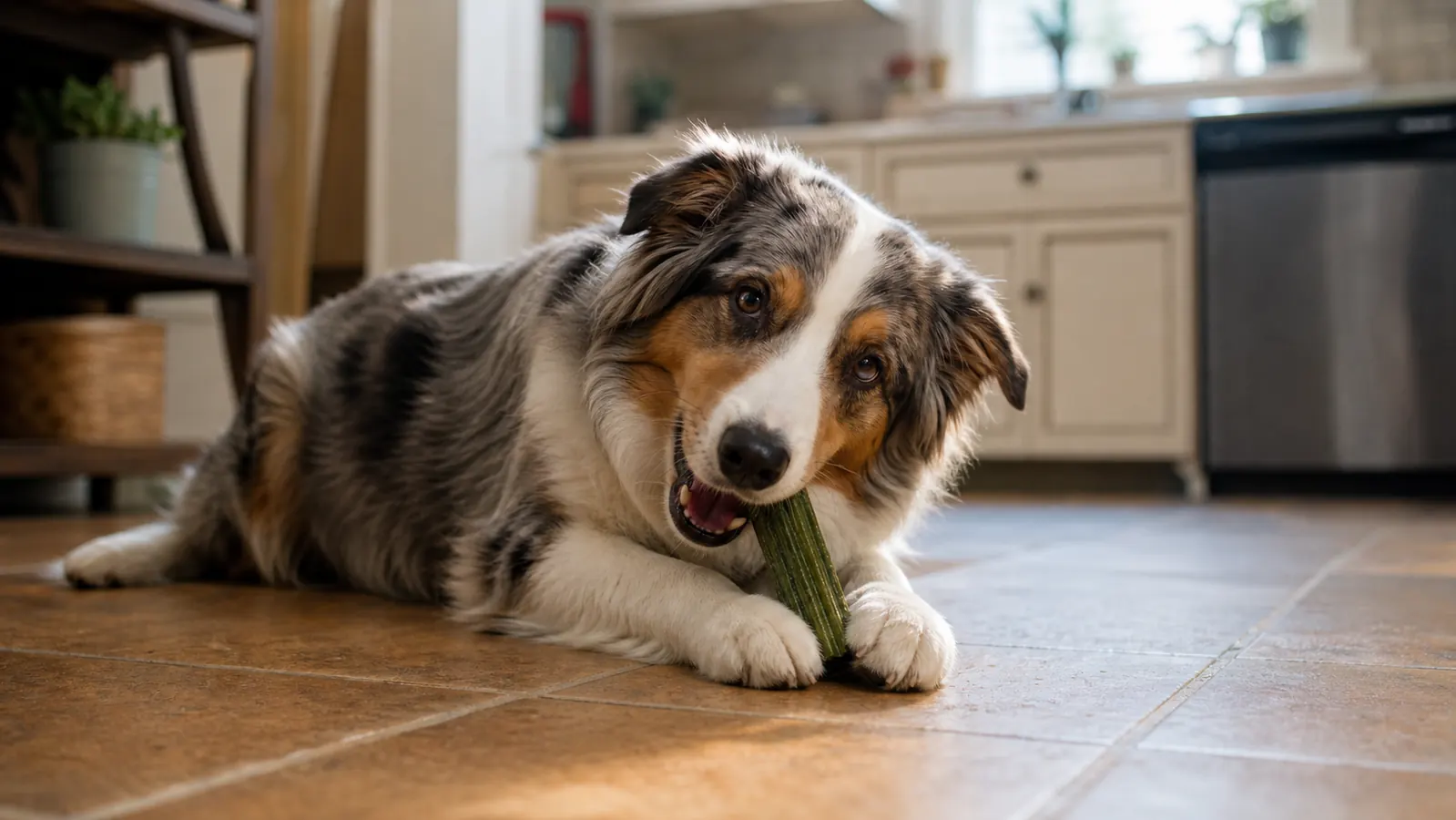
My dog Biscuit has been getting a Greenies dental chew every evening for about two years now. I started because his breath was making the couch a no-go zone. I kept going because at his last vet appointment, the vet said his teeth looked genuinely good for a seven-year-old retriever mix. She asked what I was doing. I told her: one chew a night, that's it. She nodded and said, 'Keep doing that.' So if you've been putting off your dog's dental routine because it sounds complicated or expensive, here's what I've learned. It doesn't have to be either.
Below are 10 real reasons daily dental chews matter, drawn from vet advice, what I've seen with Biscuit, and a lot of reading about what goes wrong when dog dental health gets ignored. Greenies are the ones I use and can speak to directly, but the broader point stands regardless of brand: your dog's teeth need daily attention, and a chew is the most realistic way most owners will actually do it.
If your dog's breath is making you keep your distance, this is the fix that actually sticks.
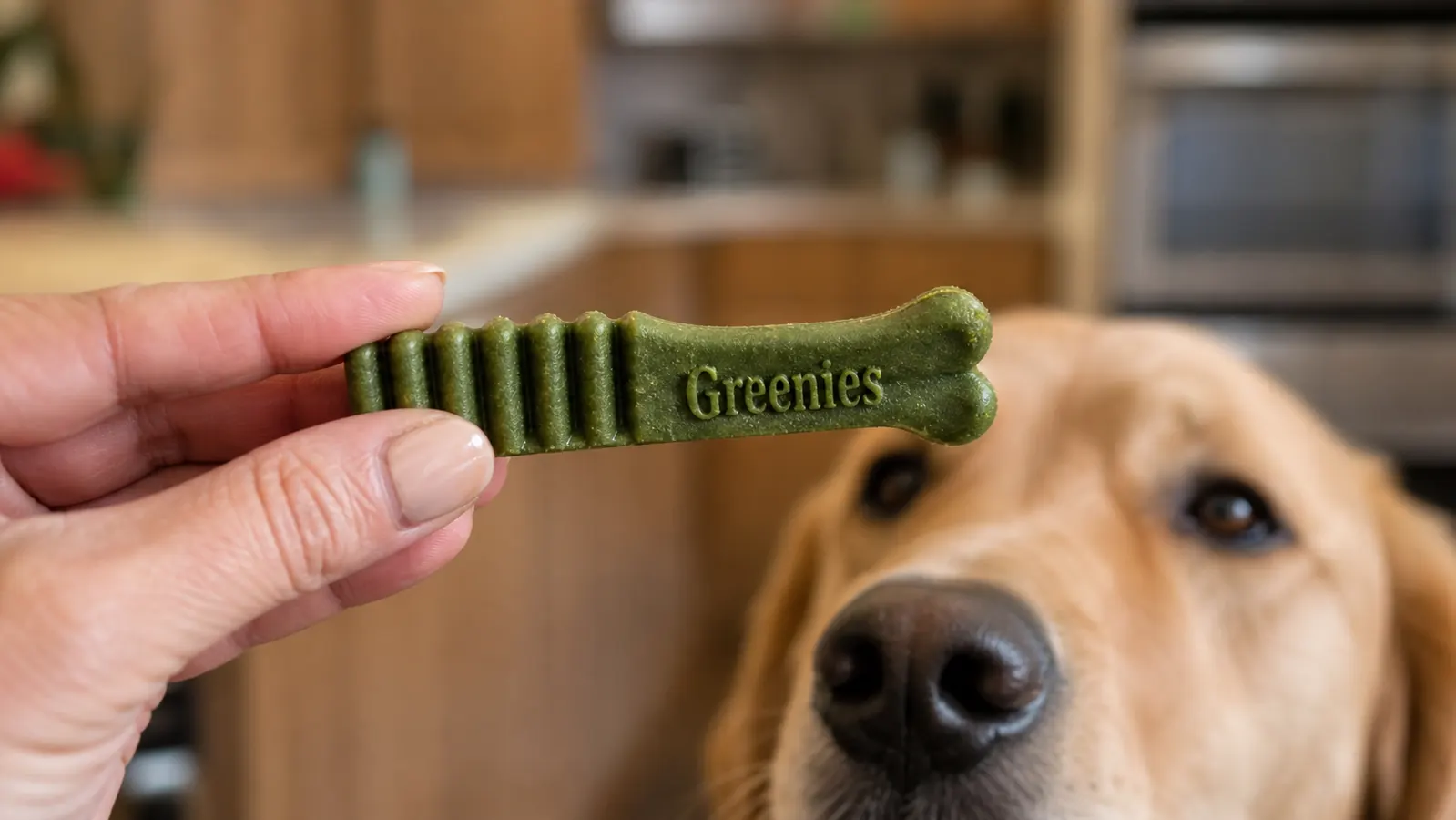
Greenies are VOHC-certified, recommended by vets, and most dogs treat them like a reward, not medicine. Regular size works for dogs 25 to 50 lbs. Check current sizing and pricing on Amazon.
Amazon Check Today's Price on Amazon →Plaque starts forming within 24 hours of eating
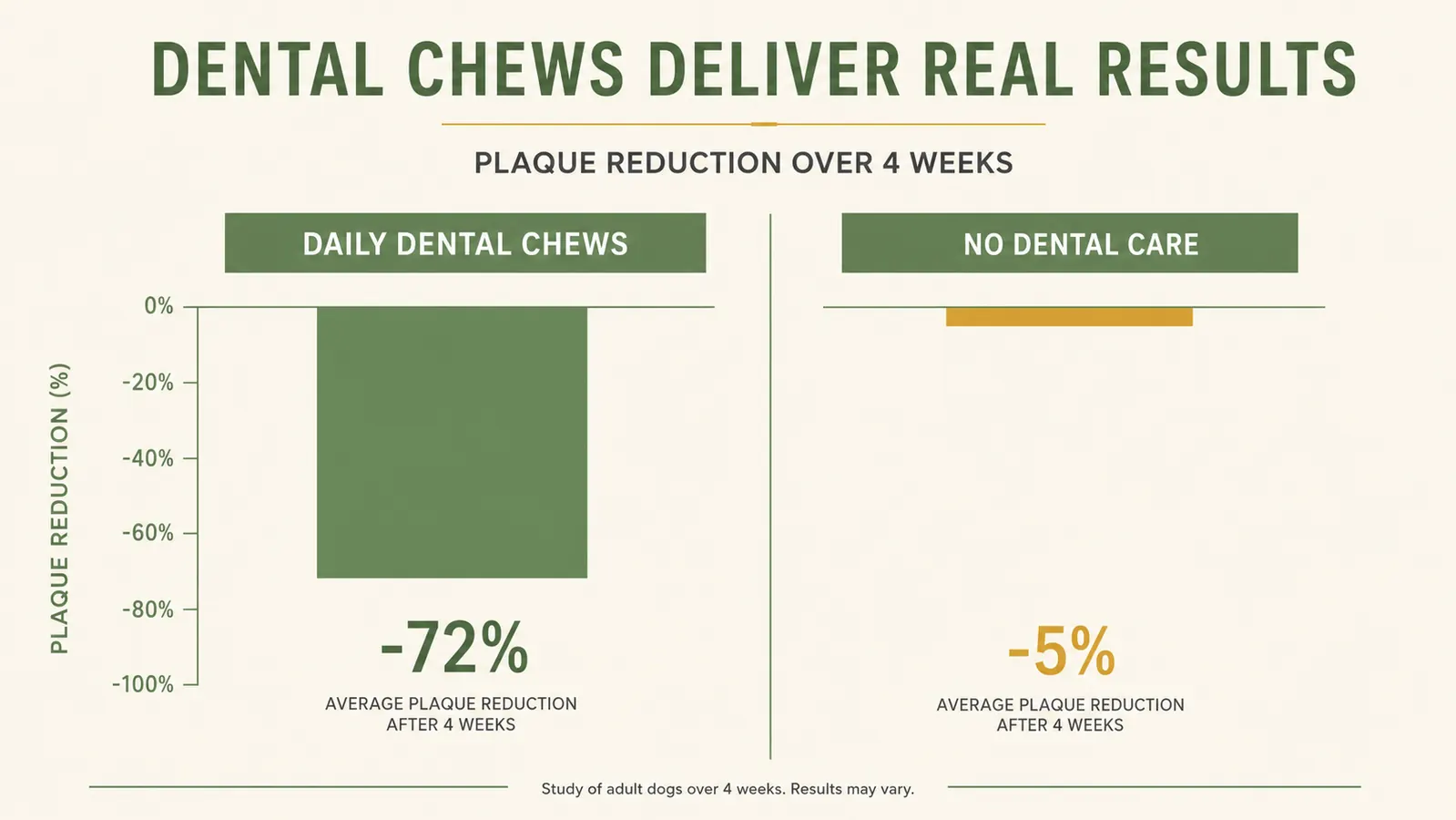
Dogs get plaque buildup just like we do, and it starts fast. Bacteria in the mouth combine with food particles and saliva to form a sticky film on the teeth within a day. Without something to disrupt that cycle daily, plaque mineralizes into tartar in as little as a week. Tartar is calcified. Brushing won't budge it. A vet cleaning will. The whole point of a daily chew is to break that 24-hour cycle before it compounds into a bigger problem.
Bad breath is a symptom, not just a nuisance
Biscuit's breath was the thing that finally got me moving. But it wasn't a hygiene vanity issue. Bad breath in dogs is almost always a sign of bacterial overgrowth in the mouth. That bacteria is sitting on their gums, working into the tissue. The smell is a warning flag. When the breath improved after a few weeks on Greenies, it wasn't cosmetic. It meant the bacterial load in his mouth had actually dropped.
Dental disease affects the heart, kidneys, and liver
This is the one that surprised me most when I first read it. Oral bacteria don't stay in the mouth. When gum tissue is inflamed or infected, bacteria can enter the bloodstream. Research has linked chronic periodontal disease in dogs to changes in the heart valves, kidneys, and liver. These are the organs you're really protecting when you stay consistent with dental care. A daily chew is one of the simplest ways to reduce the bacterial burden that leads there.
Most dogs will refuse to let you brush their teeth
I've tried. Biscuit will tolerate about four seconds of a toothbrush before he's done with the whole operation. Vets will tell you brushing is the gold standard, and they're right. But the honest follow-up is: a chew your dog actually wants to eat is infinitely more effective than a toothbrush your dog refuses six days out of seven. Daily compliance is everything. Greenies get eaten eagerly. That's the whole advantage.
A vet dental cleaning costs several hundred dollars, sometimes more
The thing people don't realize until they're quoted the price: professional dog dental cleanings require general anesthesia. That's where the cost comes from. An overnight visit, blood panels, the anesthesia itself, and the cleaning procedure add up fast. I've had one friend pay a significant amount for a senior dog with significant tartar buildup and two extractions. Compare that to a bag of Greenies. Daily prevention is one of the more straightforward cost-benefit situations in pet ownership.
The VOHC seal means the claim has actually been tested
The Veterinary Oral Health Council is an independent certification body. Products that earn the VOHC seal have submitted clinical trial data showing measurable plaque or tartar reduction. Greenies carry that seal. A lot of dental chews on the market are just flavored treats shaped to look like they clean teeth. The VOHC seal is the fastest way to sort the ones that have been verified from the ones that are just marketing.
Texture does the actual cleaning work
The way dental chews work isn't magic. It's mechanical friction. The dog bites down, the chew flexes slightly, and that contact scrubs the tooth surface. Greenies have a specific texture that gives a little instead of snapping off cleanly, which is what creates the cleaning action along the gum line. That's also why you want to size them correctly. Too small, and the dog swallows it whole without much chewing contact. The right size means they actually work the chew.
Gum disease is largely irreversible once it progresses
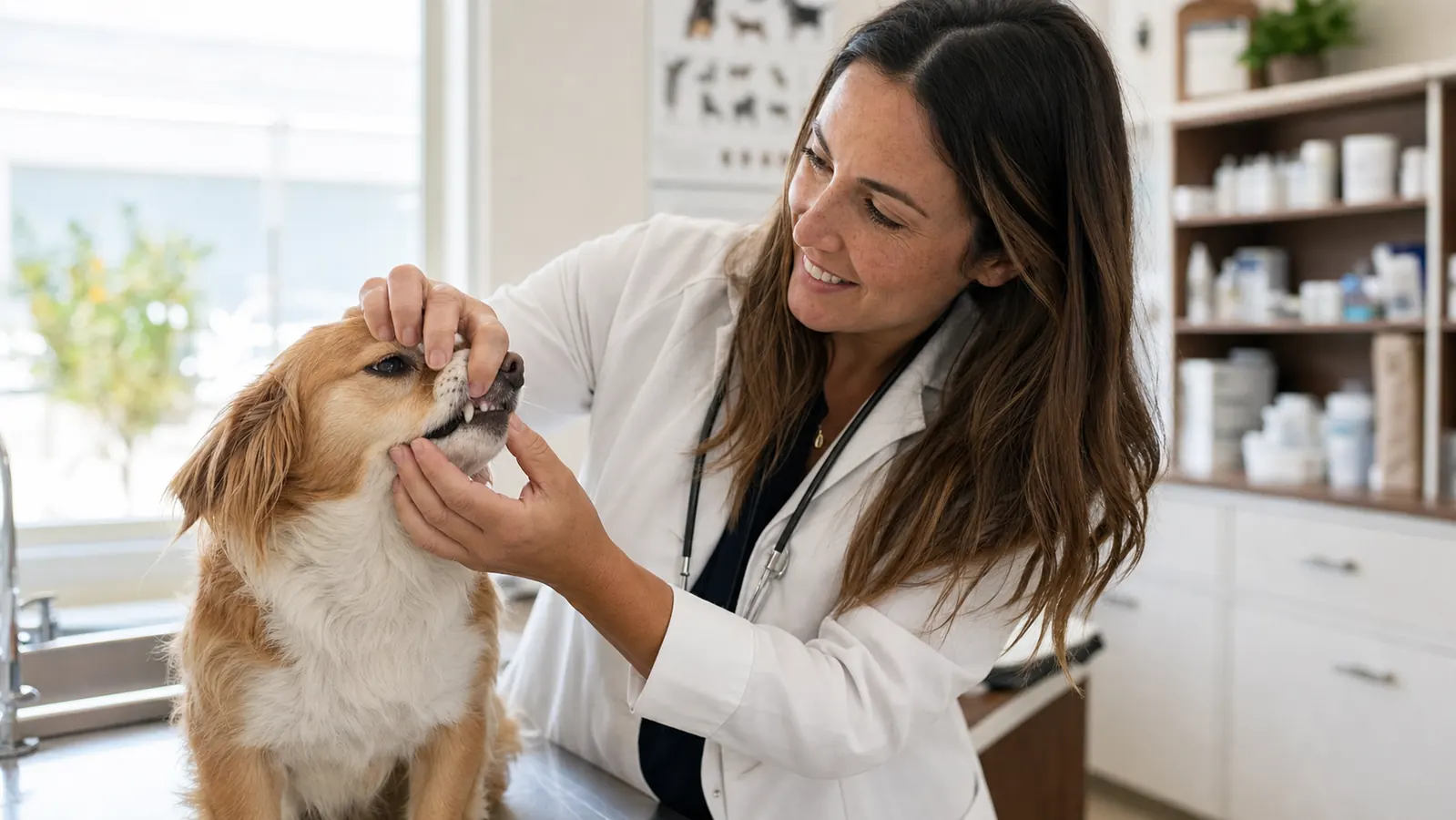
Here's the part that shifted my perspective: early-stage gum disease in dogs is called gingivitis, and it's reversible with better care. Once it progresses to periodontitis, where the tissue and bone supporting the teeth start to break down, that damage is permanent. Your vet can manage it, but you can't undo it. This is a situation where prevention is genuinely the only real option. There's no catching up once you're past stage one.
Senior dogs are especially vulnerable
Years of accumulated plaque and tartar take a toll. By age seven or eight, many dogs have some degree of periodontal disease, often without obvious symptoms until it's progressed. Older dogs also face higher anesthesia risk during cleanings, which makes prevention even more valuable as they age. If your dog is seven-plus and has never had consistent dental care, it's not too late to start. Reducing the daily bacterial load still matters even if some damage has already occurred.
It becomes a routine your dog actually looks forward to
Biscuit knows the routine. Around 8pm he starts hanging around the cabinet where I keep the bag. He sits. He waits. He eats it in about ninety seconds and then goes back to his spot on the couch. I don't have to wrestle him, trick him, or chase him around the kitchen. For a dog owner who travels, works long hours, or already feels like the to-do list for pet care is endless, 'something your dog asks you to give them' is the most sustainable dental routine you're going to find.
What I'd Skip
Not everything in the dental chew aisle is worth your money. Rawhide does some mechanical cleaning but comes with choking and digestive risks that most vets now recommend avoiding. Dental water additives and sprays can help at the margins but work best as a complement to something more mechanical, not a replacement. Toys marketed as 'dental toys' vary widely. Some have real texture that scrubs effectively; others are just rubber with a mint smell. If it doesn't have the VOHC seal or a clear clinical claim, I'd treat it as a bonus, not a primary strategy. Start with something that's been verified to actually reduce plaque, then layer in the extras.
At Biscuit's last vet appointment, the vet asked what I was doing for his teeth. I said: one chew a night. She said: keep doing that. That's the whole endorsement I needed.
One chew a night is the simplest thing you can do for your dog's long-term health.
Greenies are veterinarian-recommended, VOHC-certified, and come in sizes for dogs from five pounds to over 100. If you've been meaning to start a dental routine and haven't yet, this is the low-friction place to begin. See current sizing, variety packs, and pricing on Amazon.
Amazon Check Today's Price on Amazon →