
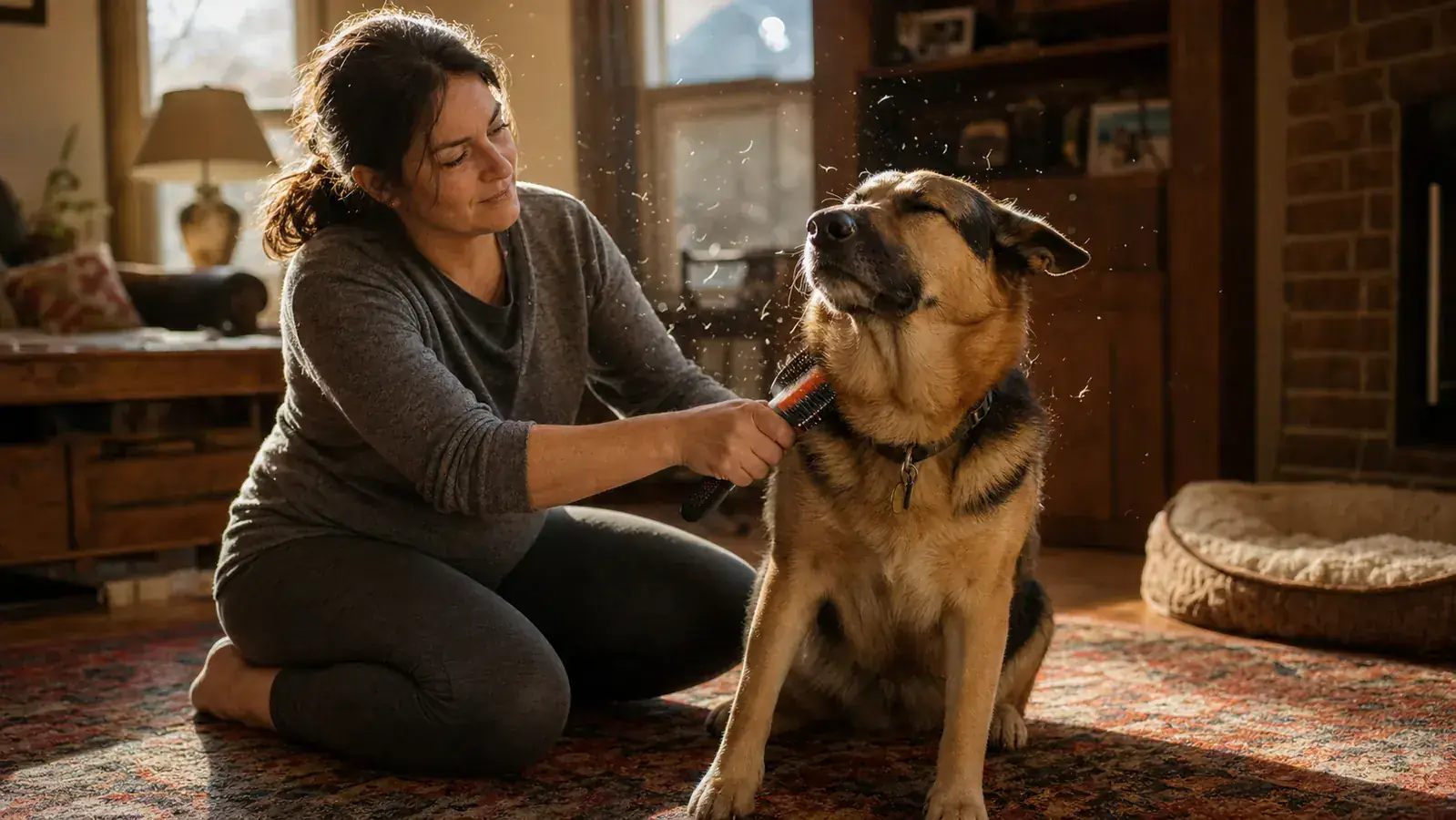
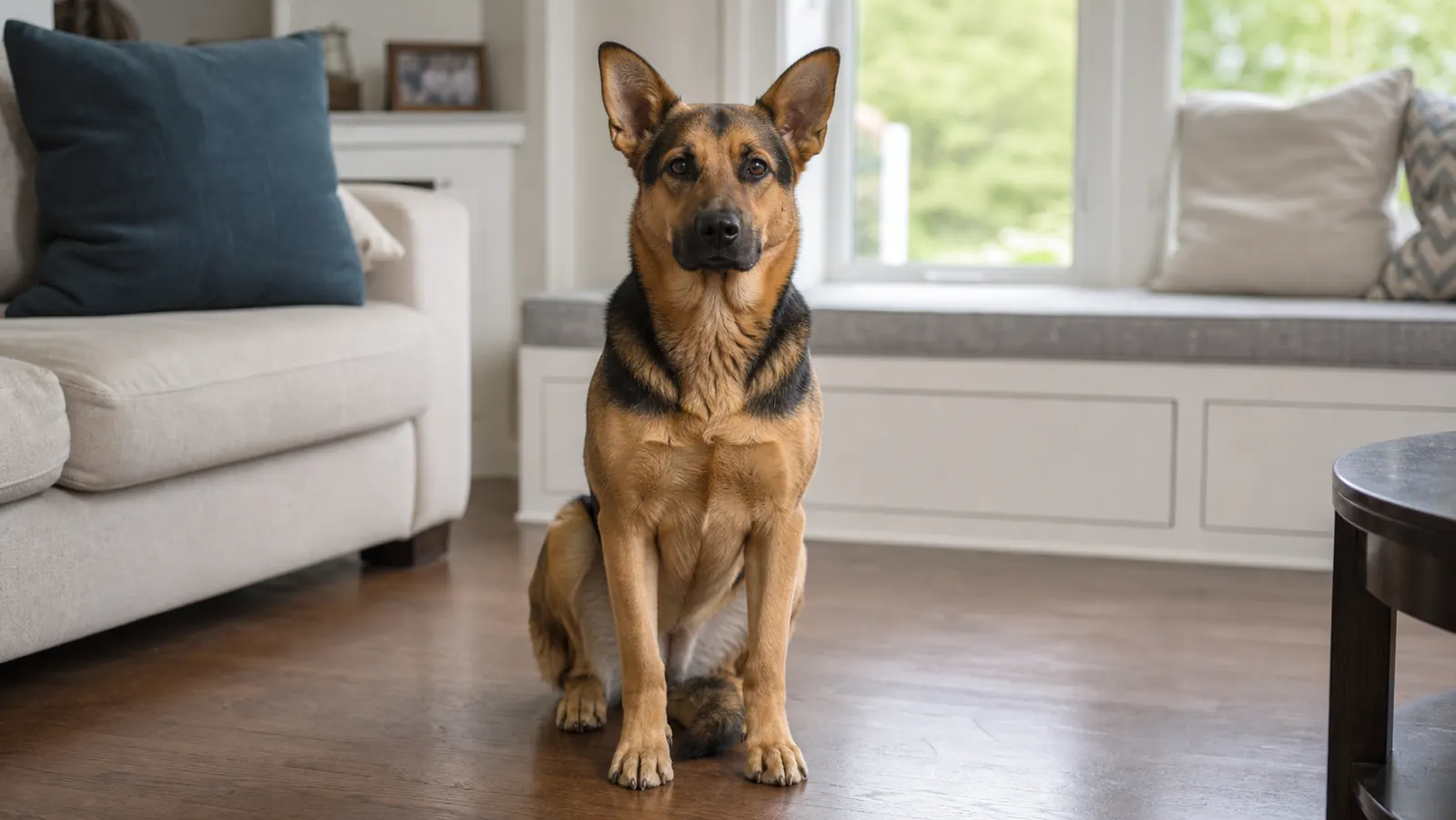
My German Shepherd mix Biscuit weighs 75 pounds and treats every piece of furniture in my house as a communal fur deposit. He is four years old, has a medium-length double coat, and sheds year-round with two especially aggressive blowout periods in spring and fall. I also have a tabby cat named Marmalade who is eight years old, short-haired, and sheds considerably more than you would expect from a cat that small. Between the two of them, the amount of pet hair in this house is, to put it plainly, a lot.
I had been using a basic slicker brush for Biscuit and a separate rubber grooming glove for Marmalade. Neither was doing the job I needed. When the Pat Your Pet deshedding brush kept showing up in every search I ran, with 42,000-plus Amazon ratings and a 4.6-star average, I got curious in the way I always get curious about products with suspiciously high review counts. Are those ratings real? Are people comparing it to good alternatives or just relieved it did not fall apart? I bought one to find out, and I spent two months actually using it on both pets before sitting down to write this.
The Quick Verdict
The Pat Your Pet brush is genuinely good for medium to large double-coated dogs, but the 42,000 reviews include a lot of single-coat and cat owners who are rating it against low expectations. Know what it is built for and it will not disappoint you. Buy it expecting it to work for every pet and coat type and you will be less impressed.
Amazon Check Today's Price →Before you trust 42,000 ratings, read what the 1-star reviewers are actually saying.
The Pat Your Pet brush earns its stars on double-coated dogs. If that describes your situation, today's price on Amazon is hard to argue with. Click through and see current pricing before you decide.
Amazon Check Today's Price on Amazon →What Nobody Mentions About a 42,000-Review Product
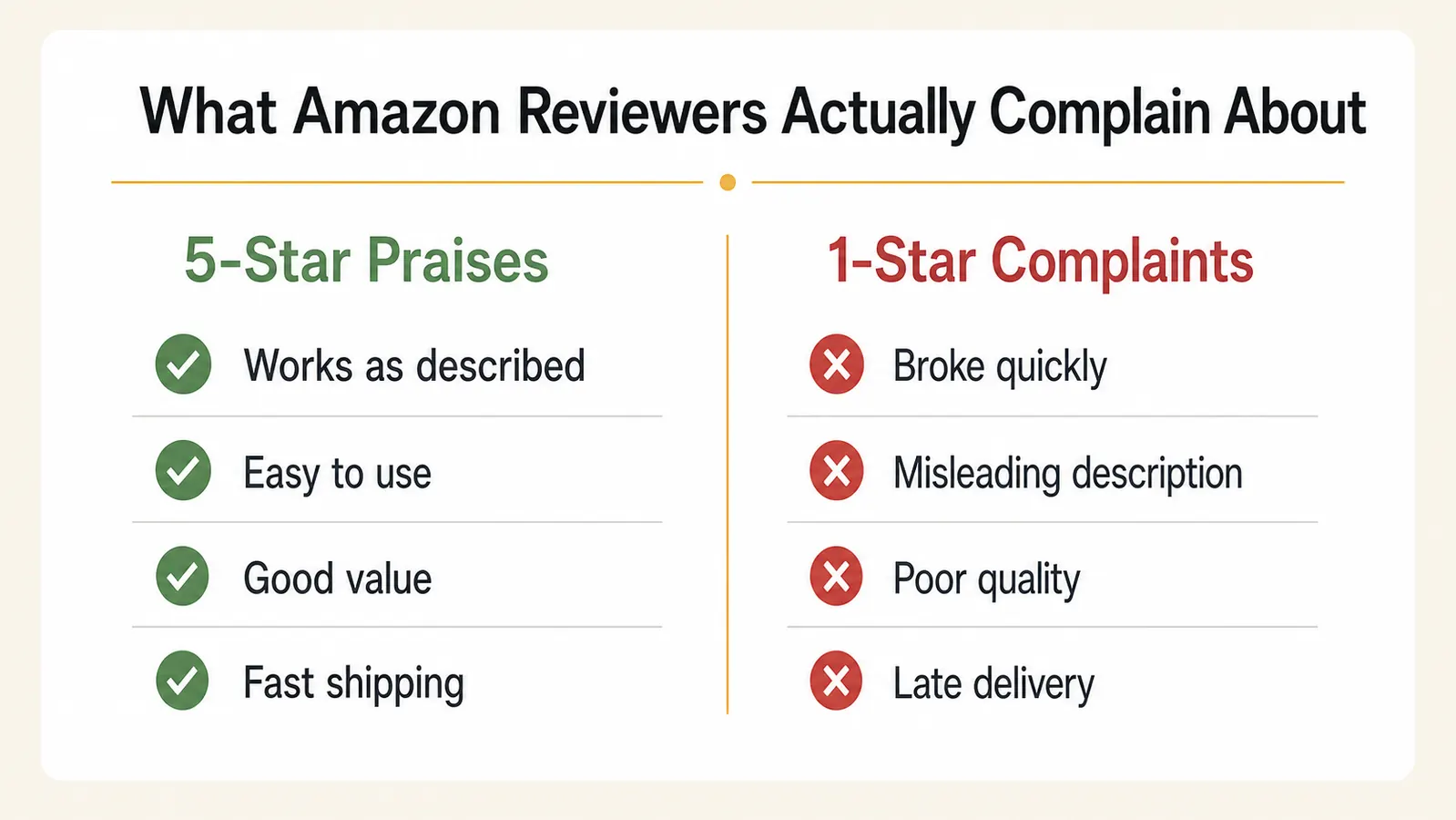
Here is the thing about products with tens of thousands of Amazon reviews: the ratings pool is so wide that the average number is almost meaningless on its own. A 4.6 from 42,000 people includes double-coated-dog owners who are thrilled, single-coat owners who thought it was fine, cat owners who found it scratchy, people who reviewed after one session, and people who have been using it for a year. All of those experiences get averaged together into a number that tells you very little about whether the product will work for your specific situation.
So I did something I recommend doing with any high-volume Amazon product: I sorted by one-star and two-star reviews and looked for patterns. The complaints clustered around three things. First, the pin side hurting cats with sensitive skin or thin coats. Second, the handle grip feeling slippery when hands are wet or cold. Third, the brush not working well on short-haired dogs who shed a lot but do not have a thick undercoat. Every single one of those complaints makes sense once you understand what this brush is actually designed to do. It is a double-sided tool built for double-coated breeds. Used on the right pet, most of those complaints disappear.
How the Pin Side Actually Behaves on a German Shepherd Mix
Biscuit was not immediately cooperative with the pin side. The first two sessions I had to keep them short, maybe eight minutes, because he kept turning to sniff the brush. He is generally patient but slightly suspicious of new objects. By session three he had decided the pin side felt good on his back and shoulders, and he started leaning into it the way dogs do when something hits the right spot. That break-in period is worth mentioning because a lot of people try a new grooming tool once, get mixed results, and return it. Give it three sessions.
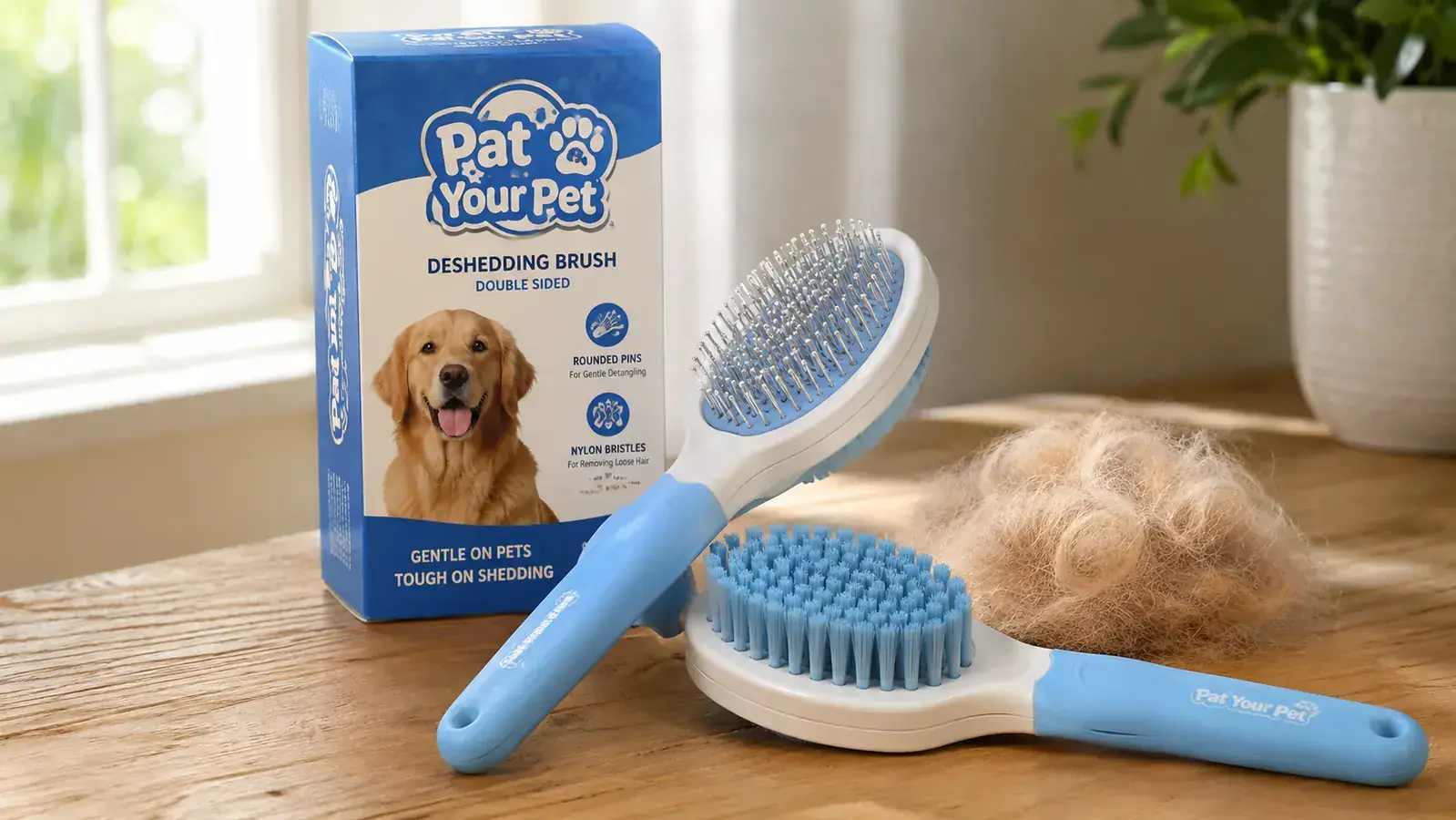
Once Biscuit settled in, the results were clear. The pin side pulls loose undercoat without scratching his skin, which was my biggest worry given that his coat is medium-length and lies fairly flat. The pins are rounded at the tips, not sharp, and they are long enough to reach the undercoat without digging into skin when used with a light touch. I do not press hard. I let the weight of the brush do most of the work and use long strokes in the direction of the coat. On a 75-pound dog with a full coat, a 15-minute session leaves a noticeably larger fur pile than my old slicker brush ever managed.
The part that surprised me was how quickly fur removal slows down after a few consistent sessions. After about two weeks of every-other-day brushing, each session produced less fur than the last. That sounds like the brush is losing effectiveness. It is actually the opposite: once you clear the backlog of loose undercoat, there is simply less available to remove each time. That is the benchmark I use to evaluate any deshedding tool. If your furniture fur situation improves measurably within two to three weeks of using it consistently, the tool is doing its job.
The Side Nobody Talks About: Does the Bristle Face Actually Do Anything?
Double-sided brushes always make me wonder if one of the sides is just there to justify charging more. With the Pat Your Pet brush, the bristle side is legitimately useful, just not for what the name implies. The bristle face does not deshed. That is not its job. What it does well is smooth and polish the coat after you have done the pin work, and it works as a gentler warm-up pass for pets who are nervous about grooming. I use it on Biscuit for the first two or three minutes of every session before I flip to the pins. It settles him down and gets the surface coat oriented so the pin side moves more smoothly through it.
The bristle side is also where the brush earns points with cats, but with an important caveat I will get to in the next section. If you have a pet who dislikes grooming, starting every session with the bristle face and building from there is a reasonable strategy. The problem is that the marketing leans into the double-sided angle as though both sides do the same job. They do not, and once you understand that, you will use the brush correctly instead of being disappointed that flipping it over does not double your fur removal.
The 42,000 reviews are real. But they include a lot of people comparing this brush to a rubber glove or a basic drugstore brush. That bar is not hard to clear.
What Happens When You Use It on a Short-Haired Cat
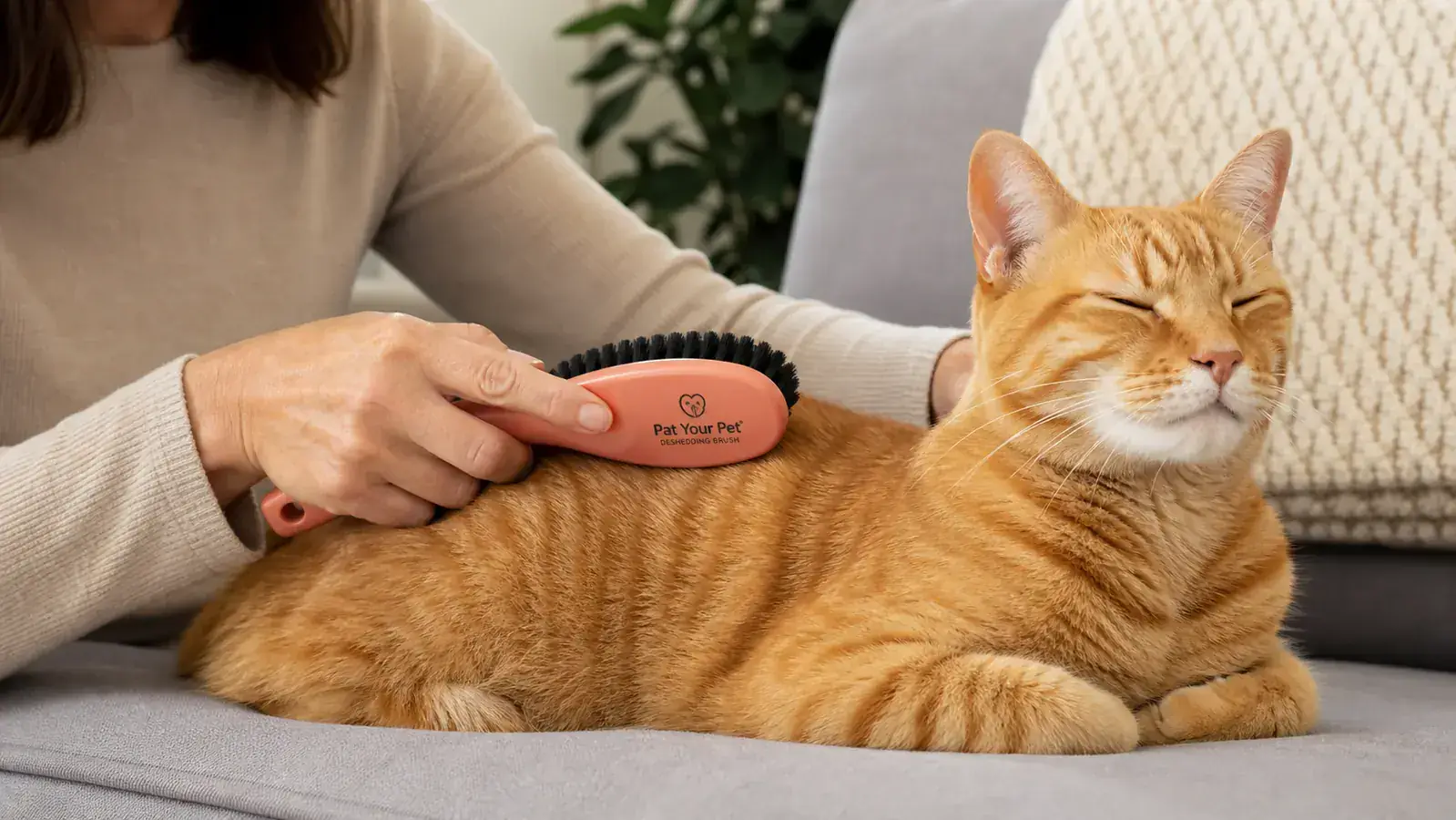
Marmalade is a short-haired tabby with sensitive skin. She tolerates grooming on her terms, which means she will allow about four minutes of brushing before she decides she is done and removes herself from the situation. I tried the pin side on her twice and both times she flinched and pulled away within about thirty seconds. The pins are not sharp, but they apply pressure that a short-haired cat's skin registers differently than a thick-coated dog's skin does. I switched to the bristle side exclusively for her and got a much better response.
On the bristle side, Marmalade was fine. She did not love it the way she loves her rubber grooming glove, but she tolerated it and the bristles did pick up surface shedding reasonably well. The honest answer is that this brush is not optimized for short-haired cats. If Marmalade were my only pet, I would not buy this. But because I have both a large double-coated dog and a short-haired cat, the bristle face covers my cat's basic grooming needs while the pin face handles the serious deshedding work on Biscuit. One brush covering two pets adequately, even if not perfectly for the cat, is a reasonable trade-off at this price point.
The Grip Complaint: Is It a Real Problem?
Several of the one-star reviews I read mentioned the handle feeling slippery, and I wanted to give that a fair test. In dry indoor conditions, my grip on the handle is fine. The handle is smooth plastic with a gentle contour, not a rubberized no-slip surface. If you groom outdoors in cold weather with slightly damp hands, or if you are running a grooming session in a humid garage right after bathing your pet, the grip is noticeably less secure. That is a real limitation, not just nitpicking. For most people grooming a dry pet inside, it is not an issue. For people who regularly groom outside or immediately post-bath, consider wiping the handle dry before you start.
The handle shape itself I find comfortable for sessions up to about 20 minutes. Past that my wrist starts to feel it, but I also have mild tendonitis in my right wrist that most people would not deal with. For normal grooming sessions on a single pet, the handle is better than average for a brush at this price.
The Blowout Season Test: When This Brush Either Proves Itself or Fails
I started using the Pat Your Pet brush in late April, which put it directly into Biscuit's spring blowout window. This is the period, usually four to six weeks, when his undercoat releases in chunks and I can pull what looks like a small animal off him in a single session. It is the worst test condition for any deshedding tool because the volume of loose fur means the pins clog faster, the fur clouds more, and the temptation to press harder is strong because you want to get it all out. I deliberately used the brush the same way I always do, light touch, long strokes, no extra pressure, and cleaned it out every three or four passes by pulling the collected fur off by hand.
The brush held up. The pins did not bend from the increased fur load. The head did not flex or wobble under repeated use. What I noticed is that blowout season is exactly when the absence of an ejector button becomes the most inconvenient. During a normal grooming session I clear the pins maybe twice. During peak blowout I was clearing them every three passes, which added real time to each session. That is not a flaw in the construction, just a design choice that costs you convenience when volume is high. A brush with a self-cleaning mechanism would have been faster. But it also would have cost three times more, and the Pat Your Pet brush handled the structural demand without complaint.
Build Quality After Two Months
Nothing has broken. That is the short version. The pins are all intact. The plastic body has not cracked. The bristles have not splayed or come loose. I clean the brush after each session by pulling the collected fur off the pins by hand and giving both sides a quick rinse under warm water. It dries fast and there is no odor retention that I have noticed. There is no self-cleaning mechanism, which is the one feature I genuinely miss from fancier brushes. You have to manually pull fur off the pin side every few passes during a session when your dog is shedding heavily. For some people that is a minor inconvenience. For people who groom multiple pets back to back, it adds up.
Two months in, this brush feels like it will last a couple of years of regular use, not a few months. That matters at any price, but it matters especially when you are buying something in the budget tier. The biggest failure mode I have seen in cheap pet brushes is pins that bend or bristles that fall out within two or three months. Neither has happened here.
What I Liked
- Pin side pulls real undercoat on double-coated medium and large dogs without bending or scratching
- Bristle side functions as a useful warm-up pass and a tolerable option for short-haired cats
- Build quality is noticeably better than other brushes at this price point, no bent pins after two months of blowout-season use
- Ergonomic handle is comfortable for sessions up to 20 minutes under normal indoor conditions
- Easy to clean with a quick rinse, fast drying between sessions
Where It Falls Short
- No self-cleaning ejector mechanism, fur removal from pins is fully manual and becomes a real time cost during blowout season
- Pin side is too firm for short-haired cats with sensitive skin
- Handle grip becomes noticeably less secure in damp or cold conditions
- Does not work well on single-layer coats, including most short-haired dogs
- High review count on Amazon makes it easy to misjudge how broadly applicable this brush really is
Who This Is For
If you have a medium to large dog with a double coat, this brush is a strong buy. German Shepherds, Golden Retrievers, Bernese Mountain Dogs, Corgis, Malamutes, Chows, any breed known for significant undercoat shedding. If you are also willing to groom on a regular schedule rather than doing it once a month when the fur situation has become intolerable, you will see real results. The brush also works acceptably on longhaired cats using the bristle side, and on cats with thicker coats using the pins with a light hand. For mixed-pet households like mine, it covers enough ground to justify having one brush instead of three.
Who Should Skip It
If your pet is a short-haired cat, a smooth-coated dog like a Boxer or Vizsla, or a poodle-type with a single curly layer, this brush is probably not the right fit. The pin side will feel too aggressive on short or single-layer coats and the bristle side alone does not justify the purchase when a rubber grooming glove does the same job for less. Also skip it if you need a self-cleaning button for convenience, or if you groom outdoors frequently in cold wet conditions where the grip will work against you. And if your dog already has significant matting, this is not a detangler. Work the mats out first with a wide-tooth comb, then use this brush for maintenance.
If you have a double-coated dog, the math on this brush is simple.
Two months of real-world testing on a German Shepherd mix and a tabby cat, including peak blowout season. The Pat Your Pet brush earns its 42,000 ratings for the right pet and the right coat. Check today's price on Amazon and see whether it fits your situation.
Amazon Check Today's Price on Amazon →