
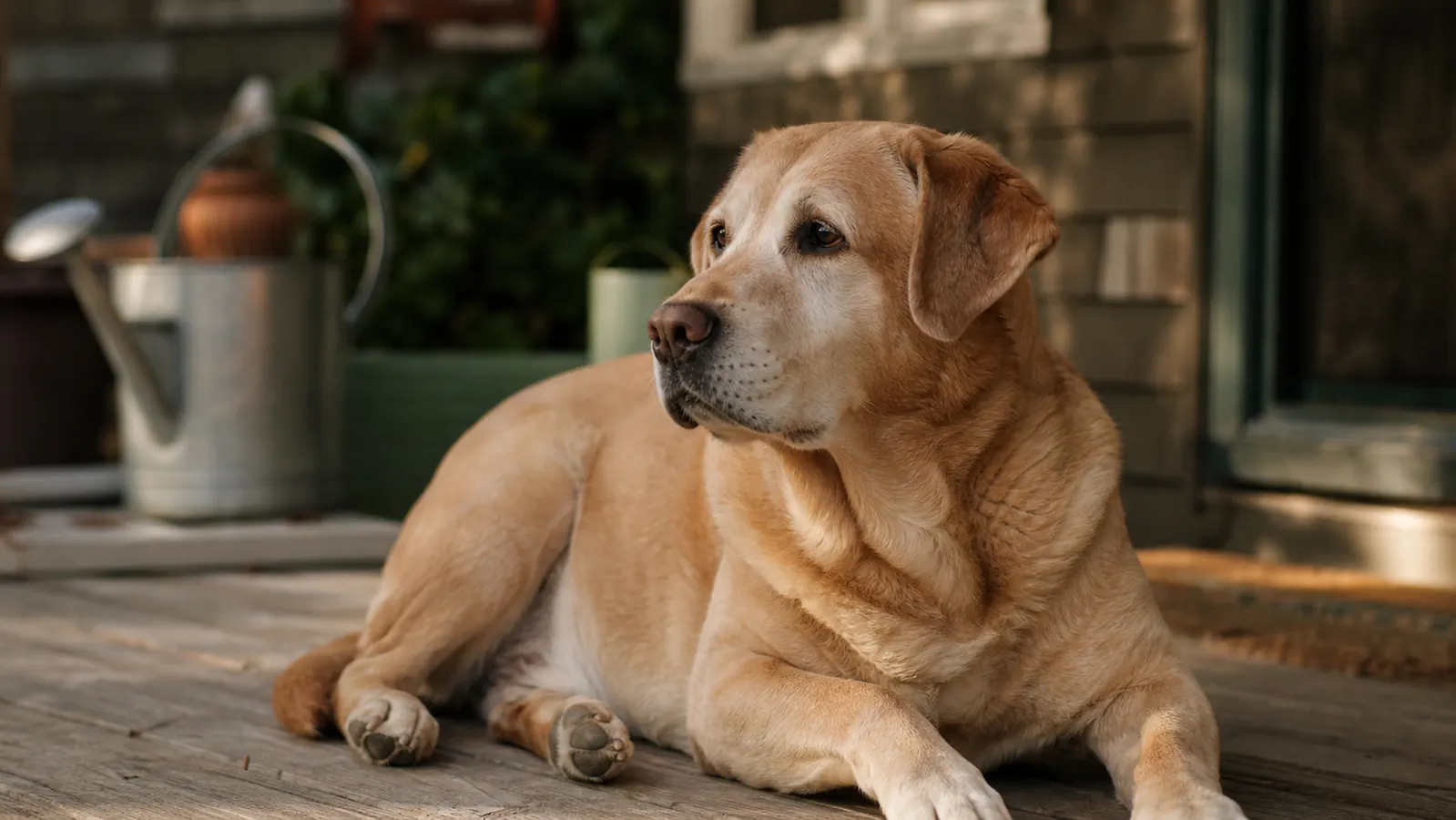
My dog Hazel turned 13 last spring. For the past two years she has been slow to get up in the mornings, and last winter I noticed her pausing at the bottom of the two steps to our backyard. Not refusing, just hesitating, like she was calculating whether it was worth the effort. If you have a senior dog doing something similar, I want to share what has actually helped us, step by step, because I spent a frustrating few months trying things in the wrong order. The single biggest help for us was a daily glucosamine supplement, specifically Nutramax Cosequin, which I will cover in the steps below.
Joint stiffness in older dogs is almost universal. By age 10, roughly 80 percent of large-breed dogs show some signs of arthritis or cartilage wear, and even smaller breeds start to feel it in the double digits. The good news is that you do not need a weekly vet appointment or expensive prescription meds to make a meaningful difference. Most of what helps is consistent, low-cost, and something you can start this week. Here is the order I would do it in.
Your dog is stiff every morning and you want to help now.
Nutramax Cosequin is the joint supplement vets recommend more than any other brand, with glucosamine and chondroitin in research-backed doses. Over 78,000 Amazon reviews from pet owners who were exactly where you are right now.
Amazon Check Today's Price on Amazon →Step 1: Start a Daily Joint Supplement
I know this sounds like I am trying to sell you something, so let me be direct about the research first. Glucosamine and chondroitin sulfate are the two compounds that have the most consistent evidence for supporting cartilage health in dogs. They do not reverse existing damage, but they slow the breakdown, reduce inflammation at the joint level, and many dogs show real improvement in mobility after four to eight weeks of daily use. The key word is daily. These are not pain pills you give when things get bad. They work through accumulation.
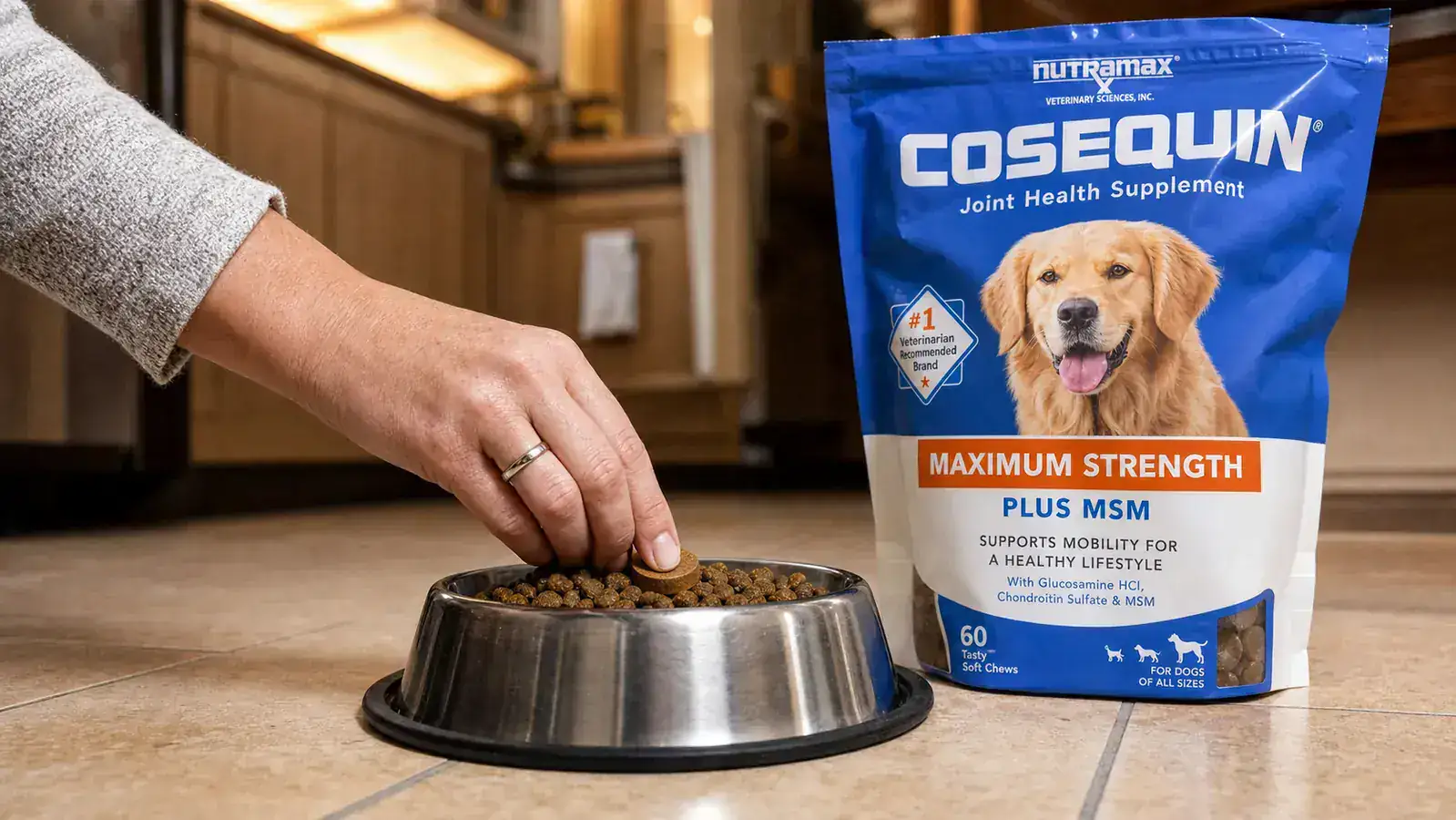
After trying a few different brands, I landed on Nutramax Cosequin. It is the one my vet pointed to when I asked her directly what she would give her own dog. The dosing is straightforward: larger dogs get two chews daily for the first four to six weeks (the loading dose), then drop to one. Hazel took to them immediately off her regular kibble with no stomach upset. Within six weeks I noticed she was getting up from her bed in the morning without that long pause and stretch she had been doing. I cannot promise every dog responds the same way, but the reviews are consistent enough that I feel confident recommending it as the first step.
One honest trade-off: Cosequin is not the cheapest option on the shelf. You will find glucosamine chews for less money. Some of them work fine. But Cosequin goes through third-party purity testing and has been studied in published veterinary trials in a way most of the budget options have not. For me, the peace of mind is worth the price difference. You can read a deeper look at the long-term results in our full Cosequin review if you want more detail before deciding.
Step 2: Switch to a Low-Impact Daily Walk Routine
I made the mistake early on of thinking Hazel needed rest when she was stiff. Rest sounds logical, right? Her joints hurt, so let her lie down more. But that is actually the opposite of what helps. Gentle movement keeps synovial fluid circulating in the joint, maintains muscle mass that supports the joint, and prevents the kind of stiffness that comes from extended inactivity. What you want is low-impact movement, not vigorous exercise.
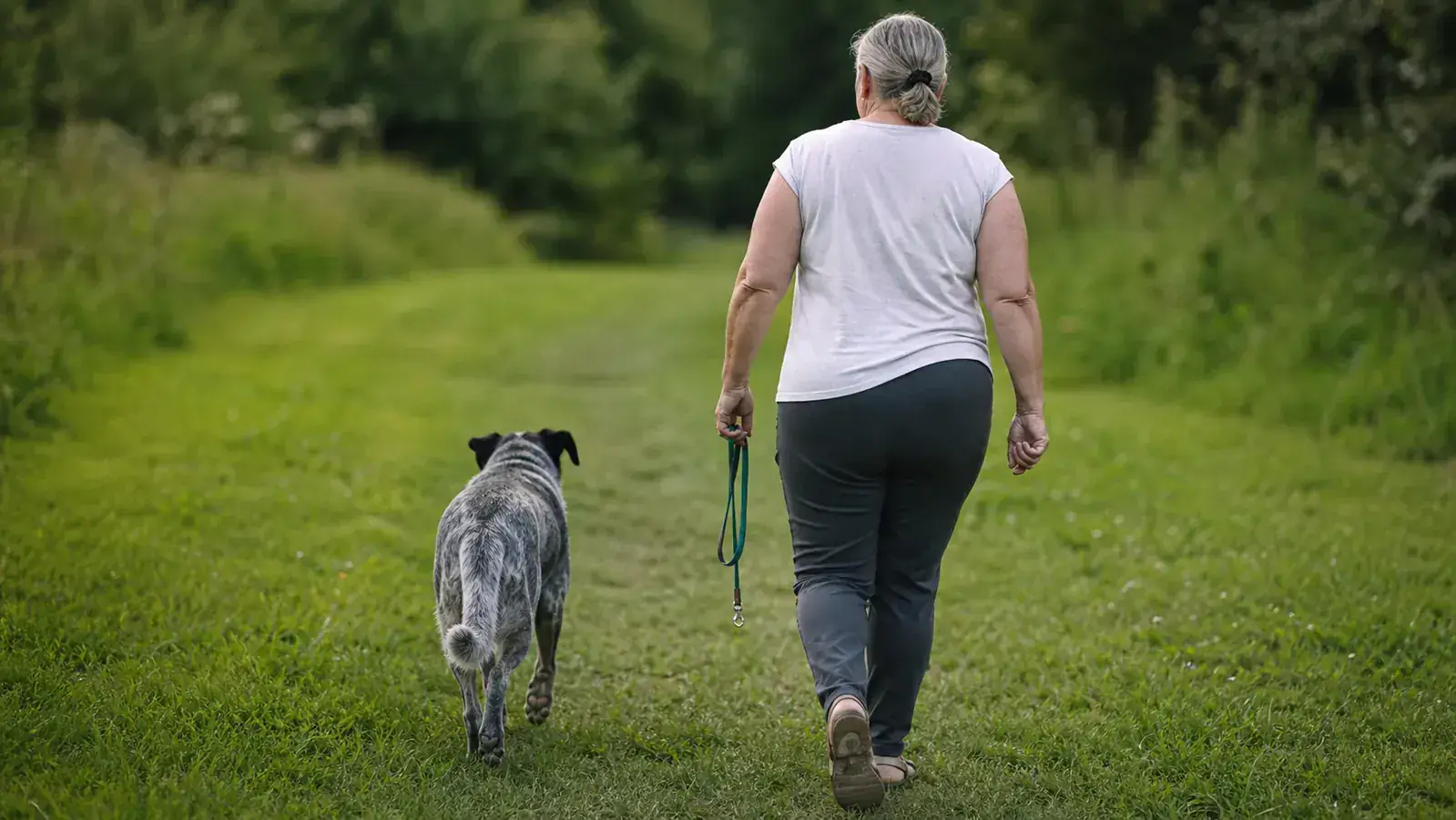
For Hazel, this means two shorter walks a day instead of one long one. We go about 15 minutes in the morning and 20 minutes in the afternoon on flat ground. I avoid concrete when I can and stick to grass or packed dirt paths. No fetch, no jumping, no stairs she does not need to take. Hills are fine going down, harder going up, so I watch her gait and we turn back when I see her starting to shorten her stride. The goal is to keep her moving without loading the joints in ways that cause pain.
If your dog has good days and bad days, that is normal. On bad days, shorter is fine. On good days, do not push past the normal routine. Consistency matters more than duration. A 10-minute walk every single day beats a 45-minute walk three times a week for a dog with joint issues.
Step 3: Upgrade Their Sleeping Surface
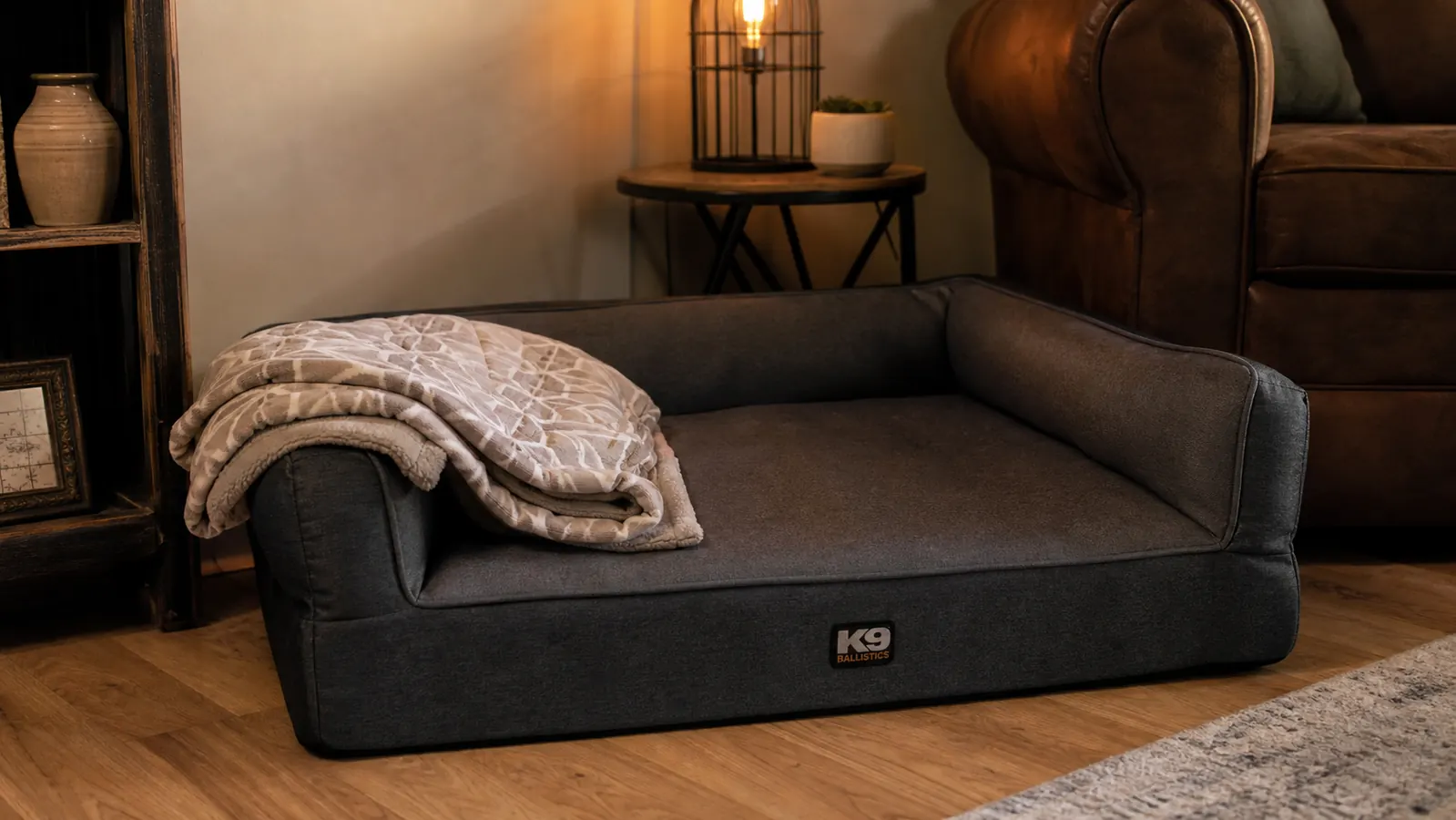
Where your dog sleeps matters more than I realized. Hard floors are a problem. A thin flat mat is barely better. Dogs with sore joints need pressure relief the same way elderly people benefit from a good mattress. An orthopedic dog bed with actual memory foam or supportive foam fill makes a real difference in how stiff they are when they first get up.
Look for a bed with sides low enough that your dog does not have to step over a high bolster to get in, and thick enough that they are not bottoming out and lying on the floor anyway. I bought Hazel a 4-inch memory foam bed and put it in a corner of the living room where she already liked to sleep. The first morning after she slept on it, she got up faster than she had in months. It could have been coincidence, but it has stayed consistent. Also check that the cover is washable, because senior dogs often have accidents.
Step 4: Manage Their Weight
Every extra pound a dog carries is roughly four additional pounds of pressure on their joints during movement. This is not a number I made up. It comes out of human orthopedic research and the principle transfers directly to dogs. A dog who is even two pounds overweight is putting eight extra pounds of force on already compromised cartilage with every step.
I know weight is a sensitive topic, because treats are one of the main ways we show our dogs we love them. I am not suggesting you cut treats entirely. I am suggesting you look honestly at your dog's body condition score. You should be able to feel their ribs without pressing hard, and see a visible waist tuck from above. If you cannot, a conversation with your vet about a slight calorie reduction is worth having. Even a small drop in body weight tends to show up fairly quickly in how mobile a senior dog is.
If you are giving joint supplements as treats or mixing them into meals, count that toward daily calories. Cosequin chews have calories in them. Small thing, but it adds up if your dog is already right at the edge of their ideal weight.
Step 5: Make the Environment Easier to Navigate
This one costs almost nothing and pays off immediately. Look at your home from your dog's perspective and identify where they are working hardest. The two most common friction points are slippery floors and stairs.
Hardwood and tile floors are genuinely difficult for dogs with sore joints. Their feet slip slightly with each step, and the muscles have to compensate constantly. A few yoga mats or runners laid down along the routes your dog travels most can make a surprising difference. For stairs, a ramp works better than a step stool for most senior dogs because it removes the impact of stepping up. I put a ramp at the back door for Hazel and she uses it voluntarily every time now. That tells me the stairs were bothering her more than she was letting on.
Also move food and water bowls to a level that does not require your dog to bend their neck way down. Raised feeders are sometimes controversial (there is a bloat debate around large breeds), but for joint dogs the reduced strain on the neck and front legs is often worth considering. Talk to your vet if you are unsure.
What Else Helps
Beyond these five steps, there are a handful of additional options worth knowing about. Warm compresses on stiff joints for 10 to 15 minutes before a walk can loosen things up noticeably. Hydrotherapy and swimming are excellent low-impact exercise options if you have access. Some vets recommend adding fish oil for its anti-inflammatory omega-3 fatty acids, which can complement glucosamine supplementation. And if your dog's stiffness is severe or has come on quickly, a vet visit to rule out acute injury or advanced arthritis is always the right call. A vet can also prescribe NSAIDs for flare-up days, which pair well with a daily supplement routine rather than replacing it.
The biggest thing I have learned over two years of managing Hazel's joint health is that none of these steps works in isolation. The supplement helps most when combined with the right weight, movement, and sleeping surface. When all five pieces are in place, the improvement is noticeable and sustained. Hazel is not a young dog. She never will be again. But she trots out to the backyard in the morning now, and that is what I was hoping for when I started researching all of this.
Hazel hesitated at our two back steps all winter. Six weeks after I started her on Cosequin and swapped out her old flat mat for a memory foam bed, she trots out there without thinking about it. Small changes, real difference.
If you want to dig deeper into the supplement side specifically, our long-term Cosequin review covers six months of tracked results and is worth reading. And if you are still deciding whether glucosamine is the right starting point for your dog, 10 Reasons Glucosamine Helps Senior Dogs walks through the research without the sales angle.
Ready to start with the supplement vets recommend most?
Cosequin by Nutramax is the joint supplement I keep coming back to after trying several others. Glucosamine plus chondroitin in the right doses, made by a company that publishes its research. The loading dose takes four to six weeks to kick in, so the sooner you start, the sooner you see results.
Amazon Check Today's Price on Amazon →