

My dog Biscuit is a 9-year-old mixed breed, about 52 pounds, and somewhere in her DNA there is definitely some Chow because she is stubborn about literally everything. When my vet mentioned early-stage elbow arthritis at her annual exam last spring and said Cosequin was worth trying, I did what I always do: I went home and spent two hours reading reviews, then spent another hour being suspicious of the reviews. Seventy-eight thousand ratings at 4.7 stars sounds great until you remember that a lot of people leave five stars because the bag arrived on time. I wanted to know what Cosequin actually does, what it does not do, what the label does not mention, and whether the price premium over generic glucosamine is real or just good branding. This review is the result of twelve weeks with Biscuit on Cosequin and a fair amount of reading before I ever opened the bottle.
I want to be upfront that I went into this skeptical. I have seen the supplement industry long enough to know that a lot of products with veterinarian-recommended stickers have very thin evidence behind them. Cosequin is not one of those products, but it is not magic either, and the way some reviewers describe it you would think their dog grew new cartilage. The truth is somewhere more nuanced, and that is what I am going to give you here.
The Quick Verdict
Solid ingredients, trustworthy manufacturing, real but modest benefits for mild joint disease. The catch: it takes patience, it costs more than generic glucosamine, and dogs with significant pain will need more than a chew supplement.
Amazon Check Today's Price →Your dog's joints are not going to feel worse while you read this review. But every week of unmanaged mild arthritis is a week of unnecessary wear.
Nutramax Cosequin is the glucosamine supplement most vets reach for first when a dog starts showing joint stiffness. Over 78,000 Amazon ratings. Pharmaceutical-grade manufacturing. Chicken liver chews that Biscuit, a notoriously picky eater, accepted without argument.
Amazon Check Today's Price on Amazon →What the Marketing Does Not Tell You About Glucosamine
Glucosamine is the active ingredient doing most of the work in Cosequin. It is a naturally occurring compound in cartilage. The idea behind supplementing it is that as dogs age and cartilage breaks down, providing extra glucosamine gives the body the raw material it needs to slow further degradation and support joint fluid. That part is accurate and reasonably well-supported by research.
What the marketing glosses over is that the research on glucosamine for dogs is genuinely mixed. There are studies showing meaningful improvement in clinical comfort scores, and there are studies showing results not much better than placebo. The honest version of that picture is: glucosamine probably helps some dogs, probably does nothing for others, and the science cannot yet tell you in advance which category your dog falls into. What Cosequin brings to that uncertain situation is manufacturing quality. Nutramax holds NASC certification and manufactures to pharmaceutical-grade standards, which means the 500 mg of glucosamine listed on the label is actually 500 mg of glucosamine in the chew. Generic store brands frequently do not hit their label claims. That consistency matters when the dose is what you are counting on.
Cosequin also pairs the glucosamine with chondroitin sulfate at 400 mg per chew. Chondroitin is found naturally in cartilage connective tissue and is thought to help cartilage retain water and resist compression. Together, the two compounds are often described as synergistic, meaning they work better as a pair than either does alone. The Maximum Strength Plus version adds MSM on top of that, which is associated with reduced soft-tissue inflammation around the joint. For early-stage arthritis like Biscuit's, our vet recommended starting with the standard DS formula. That is the version I used.
The Dosing Reality: What the Box Says vs What Actually Happens
The packaging calls for a loading phase during the first four to six weeks: two chews per day for dogs in Biscuit's weight range. After that, you drop to one chew per day for maintenance. That loading structure exists because glucosamine builds up in joint tissue gradually rather than acting immediately. It is not like giving your dog an ibuprofen and expecting relief in an hour. Understanding this up front matters a lot, because the most common thing I see in negative reviews is people who tried it for two or three weeks, saw nothing, and quit.
I gave Biscuit two chews every morning for six weeks, then dropped to one. She took them from my hand without any coaxing. The chicken liver flavor is genuinely appealing to her, which is relevant because Biscuit turns her nose up at about half of the dog treats we have tried over nine years. If your dog is a hard sell on new flavors, this is one supplement that tends to work in your favor on palatability.
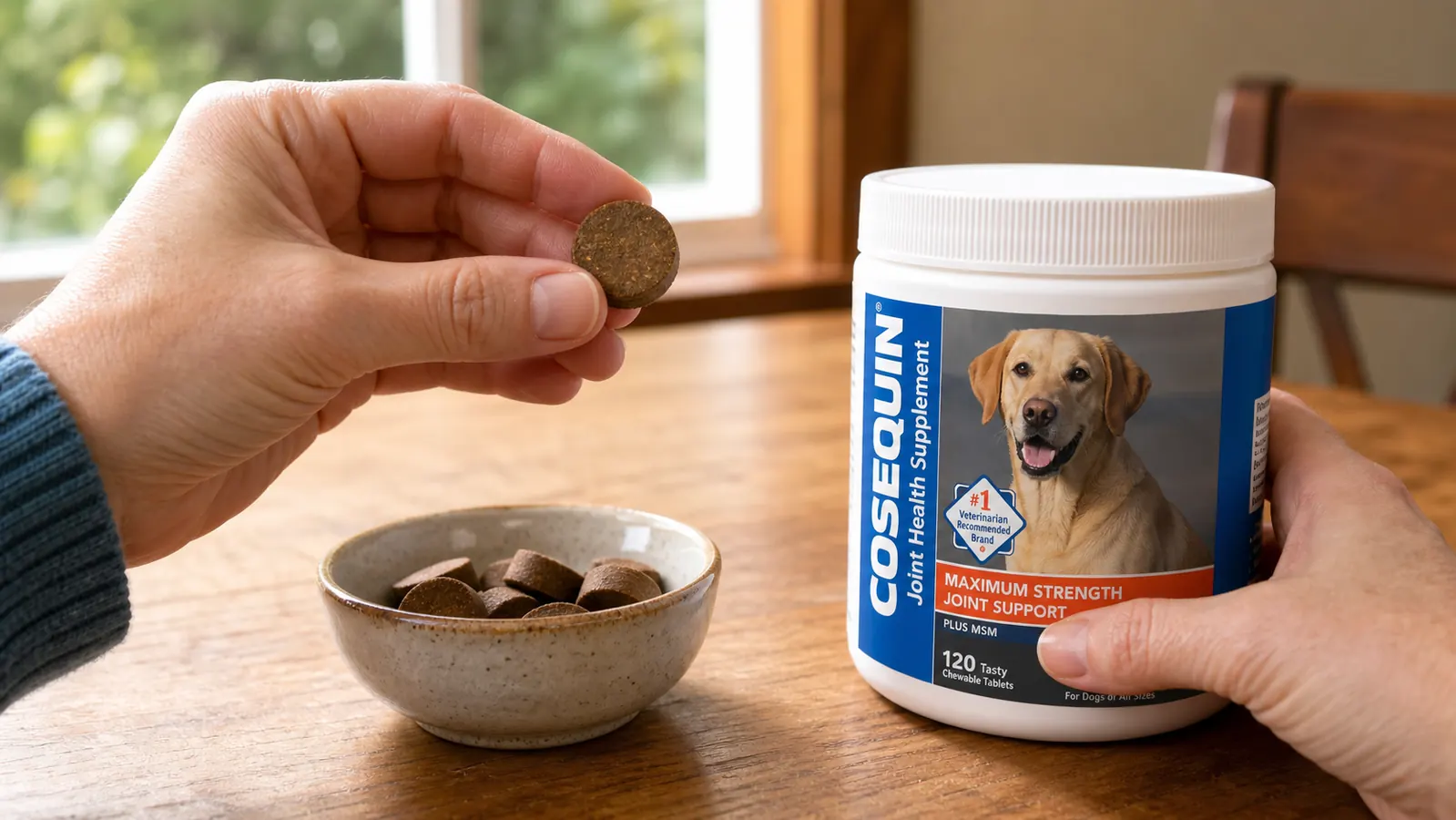
One thing the box does not mention: the chews are calorie-containing. Each one is about 10 to 12 calories depending on the formula. For a 52-pound dog like Biscuit, that is a small but real contribution to her daily intake. If your dog is managing weight alongside joint issues, and they very often go together, factor this in. I trimmed a small amount from her evening meal during the loading phase to keep the math clean. Nobody talks about this in reviews, and it matters.
What I Actually Noticed in Twelve Weeks With Biscuit
Biscuit's main symptom was a reluctance to jump up onto the couch. She had been doing it for years without a thought, and sometime last winter she started standing in front of it and reconsidering. She also occasionally held her left front leg slightly off the ground for a few seconds after lying down, which our vet identified as the elbow in question working out its morning stiffness.
By week eight, the held-leg behavior was happening maybe two mornings a week instead of four or five. By week ten, I noticed she had started jumping up to the couch again, not every time, but more often than she had been. By week twelve, where I am now, she still does not bound up the way she did at five years old, but the hesitation is mostly gone. She moves freely off her bed in the morning, and the mild hitch in her front left stride has smoothed out on most days. Cold and damp mornings are still harder for her, and I do not expect Cosequin to change that. Arthritis is arthritis. But her daily baseline comfort is noticeably better than it was when we started.
The couch is back in the rotation. Not because the arthritis disappeared. Because her daily baseline is better than it was in February, and that is the honest story of what Cosequin can do.
Is Cosequin Worth the Price, or Will a Cheaper Glucosamine Do the Same Thing?
This is the question I spent the most time on before buying, and it deserves a real answer. Cosequin costs roughly $0.55 to $0.60 per chew at the single-order price, or closer to $0.45 to $0.50 on Subscribe and Save. You can find store-brand or private-label glucosamine chews for $0.20 to $0.30 per chew. So the premium is real. Is it justified?
The core argument for the price premium comes down to two things: dose accuracy and manufacturing standards. NASC-certified facilities test finished products to confirm that what is on the label is in the chew. Many cheaper glucosamine products are made in non-certified facilities and independent testing has found meaningful label inaccuracies. When you are counting on 500 mg of glucosamine twice a day to do something useful in your dog's joints, a chew that actually delivers 250 mg because the mixing was inconsistent is not a bargain. It is a waste of money spread across more time.
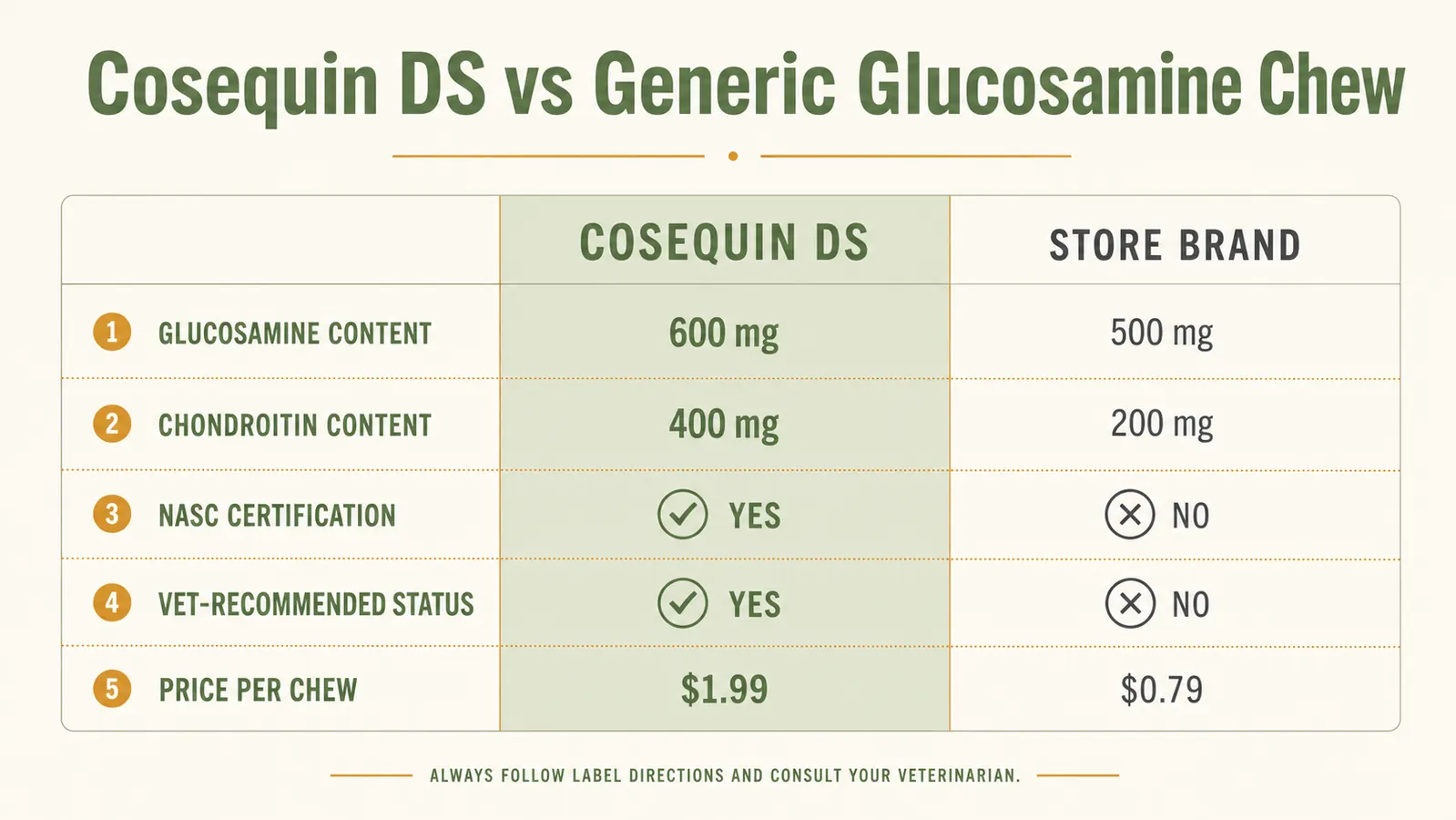
That said, I am not going to pretend that every dog on a less expensive glucosamine product gets nothing from it. Some do fine. The uncertainty is whether you can trust the label, and with a cheaper product you often cannot. My approach: for a product Biscuit is going to take every day for the rest of her life, I would rather pay for something I can verify. The price difference over a year works out to a modest amount on a one-chew-per-day maintenance dose. That is the cost of one routine vet appointment. For me, it is an easy call.
Side Effects: What to Watch For That Most Reviews Skip
Most reviews say no side effects and leave it there. Let me be more specific. Glucosamine supplements in dogs can occasionally cause soft stool or mild digestive upset, particularly during the loading phase when the dose is higher. Biscuit had slightly softer stools for about five days in week one and then normalized. If your dog has a sensitive stomach, start with one chew per day for the first week rather than jumping straight to the loading dose. It slows your timeline a little but avoids a messy few days.
There is an older concern about glucosamine and blood sugar in diabetic dogs. The research on this in dogs is inconclusive, and most veterinary internists currently consider it low-risk, but if your dog is diabetic or pre-diabetic, have that specific conversation with your vet before starting. This is not a scare warning. It is a thing to mention to your vet if it applies to your dog.
Beyond that, Biscuit had zero adverse reactions in twelve weeks. No vomiting, no itching, no change in appetite or energy. Cosequin's safety profile is one of its genuine strengths compared to the NSAID medications that are sometimes used for arthritis. Those work faster, but they carry liver and kidney monitoring requirements that a daily supplement does not.
Versions of Cosequin: Which One Should You Actually Buy
This tripped me up when I was researching, so I will lay it out simply. The main options are: Cosequin DS (double strength), which is the standard starting point for most dogs with mild joint stiffness. Cosequin Maximum Strength Plus MSM, which adds methylsulfonylmethane for additional anti-inflammatory support and is better suited to dogs with moderate joint disease. And Cosequin for Cats, which is a separate product entirely. Unless your vet recommends something specific, start with DS. If three to four months in your dog has not responded, talk to your vet about stepping up to the Max Strength Plus version before you conclude the product does not work.
The DS formula also comes in both chews and capsules. The chews are easier for most owners and most dogs. The capsules are there if your dog will not take chews for some reason, but I have never met a dog who refused the chicken liver flavor.
What I Liked
- NASC-certified, pharmaceutical-grade manufacturing you can actually trust
- Glucosamine and chondroitin at doses high enough to work, not just enough to list on a label
- Chicken liver chews accepted without fuss by even picky dogs like Biscuit
- Backed by more veterinary research than any other glucosamine brand on the market
- Clean safety profile, no liver or kidney monitoring required unlike NSAID alternatives
- Available in multiple formulas so you can match the product to your dog's level of joint disease
Where It Falls Short
- Eight to twelve weeks minimum before you should expect any change, which requires patience
- Does not work for every dog, and there is no way to know in advance whether your dog will respond
- Costs more per chew than most generic glucosamine products, with a real dollar difference over a year
- Not appropriate as the sole intervention for dogs with significant pain or advanced joint disease
- Chews add calories daily, which matters for dogs already managing weight alongside joint issues
- Can cause mild digestive upset during the loading phase in dogs with sensitive stomachs
Who This Is For
Cosequin is the right call for dogs showing early signs of joint stiffness: slower to rise in the morning, reluctant on stairs, less interested in longer walks, occasional limping after rest that works itself out in a few minutes. It is also reasonable as a preventive for large breed dogs before symptoms appear, particularly if joint disease runs in the breed. If your vet has flagged early to moderate arthritis and has not yet reached for prescription medication, this is likely exactly what they are going to recommend. The combination of trusted formulation, accessible dosing, and a safety record that does not require quarterly bloodwork makes it the sensible first step.
Who Should Skip It
If your dog is visibly painful right now, holding a limb up, refusing to bear weight, or showing significant muscle atrophy around a joint, Cosequin is not fast enough to help. That dog needs a vet appointment this week, not a supplement that takes two months to work. Cosequin can absolutely be part of a longer-term care plan alongside prescription medication, but as a replacement for that visit it will let your dog down. Similarly, if your dog has had surgery for a joint condition or has been diagnosed with severe degenerative joint disease, the supplement conversation is a different one and should happen with your vet, not Amazon.

If your dog is showing early joint stiffness, the first twelve weeks on Cosequin will tell you whether they are a responder. That is a low-risk answer to a real question.
Nutramax Cosequin is the joint supplement Biscuit still takes every morning. The elbow hesitation is mostly gone, the couch is back in her routine, and she has had zero side effects in three months. Over 78,000 verified ratings, vet-recommended, pharmaceutical-grade manufacturing. Check current pricing before you decide.
Amazon Check Today's Price on Amazon →